Showing posts with label Warhol. Show all posts

Thursday, October 24, 2024

Gary Indiana RIP

"One Brief, Scuzzy Moment"


Indiana, reviewing Blake Gopnik's book on Warhol in 2020, writes his own epitaph, and mocks his young fans. 

This book could appear only at a time when the bohemian mobility, sexual freedom, and cultural ferment of New York in the Sixties, Seventies, and early Eighties are not simply being forgotten, as people who were there die off, but becoming unimaginable. A time when New York has become so cluelessly middle class that someone can actually write, of the back room at Max’s Kansas City, that Warhol “behaved more like the cool-cat senior in high school who the freshmen do everything to impress and who looks on with amused condescension.” This is the point of view of someone who never, ever could have gotten into Max’s.
Lorentzen now has a tag. I was thinking it was odd Indiana doesn't have one, but Colin doesn't have one either. It's never necessarily been a compliment. I should have one for the new Brooklyn Intellectuals
---
a month later, remembering Menand.

Saturday, November 25, 2023

Foucault and the obvious, again and again, and again.

From an academic who found this interesting.  

There has been a lot of debate about Michel Foucault’s political orientation. He himself seemed quite content that readers found it hard to place him on a conventional left-right spectrum. But where did he stand, in the end?

I have been thinking a lot about this question. Foucault always subscribed to a number of social projects. And in his texts he was talking to readers in an ongoing transformative process. Over the past year I edited his 1971–1972 lectures at the Collège de France, together with Bernard Harcourt, and it became clear to me that his thinking revolved around the idea of change, of transformation, of individuals and collectives. In the stale climate of the 1960s we thought the transformation could occur only through literature and art. And in the early 1970s, when things were opening up, Foucault thought that social change was possible merely by changing a small number of very important relations of power — for example, the prison system. But already in 1976 he realized that this project of social change was a failure, and that people are much more easily mobilized by religious motives or nationalistic ones. The great movements weren’t social. He didn’t give up on his project of social change. But it had gotten more complicated.

The aristocratic critique of bourgeois democracy and moralism. click on the tags 

What’s on the menu?” asks Kissinger, and I can barely restrain myself from shrieking, “What’s on the menu, Henry? Would that be Operation Menu?

Liberals are idiots. Optimists are first optimists about themselves. The demimonde is always full of monarchists, etc. etc. But Ewald seems sort of grotesque.

The coverage of the Palestinian experience in the American press has never been this open. 

I got a laugh saying the fact that Bella Hadid exists is more important than anything Edward Said ever wrote. It's called naturalism. 

Tuesday, August 01, 2023

Michael Fried, 2008, leading from the rear. 

I have always liked photography, and in a low-key way I was always interested in it. I bough t a Berenice Abbott print of an Atget bedroom at the Willard Gallery in New York City more than thirty years ago, and have lived for a long time with photographs by Evans, Baldus, Frith, and O'Sullivan (a particular favorite). Over the years, too, I attended numerous exhibitions of photography, though rarely with the sense of urgency that I felt with respect to exhibitions of modern painting or sculpture. But until recently I did not have any strong intuitions about photography, and without such an intuition - some sort of epiphany, real or imagined - I have never been motivated to write on anything. Then several things happened. First, I got to know James Welling and his work because friends in Baltimore walked into his first show at Metro Pictures and bought several of the "Diary" photographs; soon they became close to him. l found that I liked his photographs enormously, and we, too, became friends . And then about ten years ago, by sheer chance, I met Jeff Wall at the Boymans Museum in Rotterdam and discovered that, to put it mildly, we were interested in many of the same pictorial issues. I had been aware of Wall's work for years and had even had an inkling of our shared concerns, but meeting him and exchanging thoughts was galvanizing for me. From that moment on I started looking seriously at recent photography, a process greatly aided by major exhibitions of work by figures such as Welling, Wall, Andreas Gursky, Thomas Struth, Bernd and Hilla Becher, Thomas Demand, Rineke Dijkstra, Candida Hofer, Hiroshi Sugimoto, and Luc Delahaye, among others. To my surprise I fairly quickly became gripped by the though that all that work, and much else besides, hung together artistically in ways that it seemed to me no one else writing about the topic had quite recognized. At that point, I began drafting what I hoped would be a short book on recent art photography that would convey the gist of my thinking. Pretty soon, though, it became clear that no such short book was in the cards. Rather, if I wanted to do justice to my subject, I would have to deal with the work of more than fifteen photographers(and, it turned out, video and filmmakers) in sufficient detail to convey a sense of what each was up to and at the same time to allow the connections I saw among their individual projects to emerge. This is what I have tried to do in Why Photography Matters as Art as Never Before.

 Sauerländer is so much more interesting. 

Rail: Were you aware of Modern Art at that time?

Sauerländer: Yes, in a moderate sense, but I would say that I developed a vivid interest in it only after coming to New York. I can’t deny it, it came with Pop Art. Not with Abstract Expressionism, not Barnett Newman, not Rothko. I’ve written on Rothko a couple of times, but I’m a little skeptical of his religious and mystical aura. It was in the 60s that I became interested in the works of Rauschenburg, [Claes] Oldenburg, and even Warhol (Warhol before 1970, Warhol after 1970 is a different thing) we had liberation, even if today I am skeptical of it. Suddenly the thick reality of a consumer’s world, of a media world, entered the art and that was liberating.

Rail: How did you feel about the German artists who became very visible in the decade of the 1980s, for example, Joseph Beuys and Anselm Kiefer?

Sauerländer: Beuys was an enormous event and we all were fascinated because he transformed cold reality, real things of the everyday world, into symbols of misery, death, extinction. It fascinated us though I admit that I always mistrusted the man a little. There was something tricky about it. The man was not very agreeable if you met him. Kiefer, on the other hand, is a man who lives from the darkest of the German meeds, which I don’t care much for. I remember the 1988 Kiefer exhibition [opening] at the MoMA full of drunken American ladies, if possible also Jewish. They looked as if they were in a Wagner opera, staring at all these symbols of German fire, blockhaus, the Reich Chancellor. I know Kiefer personally and there I would make a great distinction. There is something intelligent and even enlightened in Beuys whereas in Kiefer it’s a sort of fundamentalism that doesn’t interest me. Due to my health, I couldn’t go to see the 2007 Kiefer exhibition in the Grand Palais in Paris, which must have been gigantic. People were very impressed, but I have a suspicion that Kiefer is exactly what the French think Germany should be—Wagner and mysticism and so on.

Rail: Now getting back to where we had left off before: What was your impression of the U.S. when you came to Princeton in 1961?

Sauerländer: We had a totally idealistic image of America, it was the perfect democracy, the Bill of Rights, we believed in all of that. It was the moment of President Kennedy who everyone saw as young, progressive, and enlightened. Whether that was true, well that’s another question.

So we arrived in September just in time for the International Congress [of Art History]. Upon arriving at the Columbia dormitory where we were housed, my wife asked: “Goodness, who is that?” There was man who looked like an Old Testament prophet! It was Meyer Schapiro and he was the first person we saw. Apart from participating in the Congress, it was a great experience to come from truncated Germany and suddenly encounter all these émigrés. It was Panofsky, his wife, and Walter Friedländer; suddenly we discovered a Germany that no longer existed in Germany. We couldn’t help but just listen to them because they had very much remained German. With that said they, especially Panofksy naturally, regarded themselves as American. Suddenly a pre-Nazi German past came back on us and it was astonishing. During this first phase in the United States, between ’61 and ’62, we became close friends with Panofsky, Friedländer and Krautheimer. Later I invited Freidländer to Freiburg where he taught before ’33 and Panofsky took an honorary position there; [seeing these scholars return to Germany, if only temporarily] was a very important part of my American experience....

I must say that I remained in unbroken admiration of the U.S., even in ’64-’65, I found it all wonderful. Then I came back to teach in 1970 during the centenary of the Metropolitan Museum and there were all these parties with rich ladies—Panofsky, Friedländer, all were dead, the emigrés, in part, had disappeared. I suddenly saw all the poor people on the streets and I discovered the dark side of America. It was actually the moment when Panofsky’s great illumination was at its end—everyone imitated him. Panofsky himself said, “Well if I am punished for what I did to art history, I will come into the seventh stage of Hell.” In ’65 he gave those Titian lectures, which with all respect for Panofsky were a disaster. I mean, reducing Titian to iconography naturally doesn’t work....

Rail: Was your enthusiasm for America and Pop Art something shared by Germans at the time? 

Sauerländer: I don’t think there were many people in Germany who were aware of it. There was Evelyn Weiss in Cologne who wrote on Pop Art and I’m not absolutely sure at what moment Peter Ludwig, a collector of art in Cologne who bought an enormous number of Pop Art pieces, began acquiring it. It was relatively early even in New York as well. [Barnett] Newman, [Mark] Rothko, [Meyer] Schapiro were shocked by Pop, they thought it was the end. It was a break that others have to write about. I couldn’t have done it in 1970, which I regret it to this day. This break coincides with all the social and mental changes of the 60s—before and after 1968.

Rail: Even in America, it has taken time for Pop to enter scholarly discourse.

Sauerländer: The disturbing question is what remains? I was very fascinated by [Edward] Kienholz, [Robert] Rauschenberg, and [Claes] Oldenburg, but where are they today? Warhol remains an icon—Warhol until 1970. Later the factory goes wrong. At this moment I find photography seems to be more interesting than other fields, especially, there are very good photographers in Germany, for example [Thomas] Struth, [Andreas] Gursky.

Rail: How about Bernd and Hilla Becher, Candida Höffer?

Sauerländer: Höffer, yes, too many libraries, a little bit sterile. I have great problems with the Bechers. There is a great human message with Walker Evans, but never were with the Bechers or Höffer. [Bernd] told me that he photographed at 5 a.m. and made scaffolding above the human level, on an abstract level. The [Robert] Bergman catalogue that you gave me is something different altogether.  [August] Sander is one of the greatest artists of the twentieth century. [Thomas] Struth and [Thomas] Demand are interesting.

Panofsky's book on Titian begins with an editor's acknowledgment, quoting Panofsky, that he never intended to do an overview of Titian's career and the focus on iconography was in no way an attempt to set a limit on the work itself, and that the the images were all black and white "not in spite but because of the fact that Titian was the greatest ‘colorist’ who ever lived.” And then the passage I remember from his description of The Flaying of Marsyas, even though he was wrong in wanting to deny attribution, is key to any understanding of Titian.

When Panofsky writes that Titian, “like Henry James’ Linda Pallant, ‘knew the value of intervals’” he’s describing Titian’s focus on the space between objects and people, and implicitly between viewer and canvas.  The connecting line isn’t a formal cue, an arrow or the edge of a table or the stripes on a piece of fabric; space is crossed often only by a line of sight. As in the theater, actors’ success or failure isn’t measured in inches or millimeters to match the perfect ratio of  the sides of a triangle, but in faces and gestures directed at each other. And Titian makes sure the space isn’t so cluttered that things get in the way. The sense of time as the our eyes move observing others’ eyes, the fleeting sense of intimacy is beyond anything in Florence.  It’s an an art that doesn’t even try to give us an illusion of perfection, except perhaps as a ‘perfect’ description of its lack.

I'm not going to quibble with other criticisms of the book. I take things that strike me and ignore others. As a scholar I'm an amateur. As for the interview I'd be surprised if Germans didn't know Warhol by the early 70s. According to a timeline I found at the Met, in 1968 he had a retrospective that went from the Moderna Museet to the Stedelijk and he had work in Documenta. But his interest in Warhol, until 1970—it's be too much to wish he'd added Rauschenberg until 64—after his scepticism about Newman and Rothko as religious theater, and then Kiefer...  we all try to distinguish between observing and imposing, reading and reading in, but the 20th century was a century of enthusiasts.  "Newman, Rothko, Schapiro were shocked by Pop, they thought it was the end." I'm sure Panofsky laughed.  

Fried spends a good deal of time on Douglas Gordon, and his documentary with Philippe Parreno—in the form of "video art"— on Zidane, but says nothing about its predecessor. I din't know about it either until I found on the Wikipedia page about their film, but they knew about it of course, and never bothered to tell Fried. Gordon and Parreno's film has a theatrical intimacy, and with the music, an aestheticized, poeticized, melancholy; it's a film about the past in the sense that Hellmuth Costard's film is about its present. And the new film fits with the culture of music videos and advertising that grew out of video art.

Fried is the sort of critic who has a better idea of what good art should be than why anyone would want to make art to begin with. He's easily seduced by the impression of seriousness. Sauerländer saw seriousness in Warhol's work and knew the rest was secondary. Fried was right to see immaturity in the work of the late 60s and he's right to see maturity now, but he doesn't understand history, time, and change. 

A Man United fan account has put Costard's film on Youtube. We'll see how long it lasts.

Saturday, June 24, 2023

Unlike most realists, Marx does not see art as precious because it reflects reality. On the contrary, it is most relevant to humanity when it is an end in itself. Art is a critique of instrumental reason. John Milton sold Paradise Lost to a publisher for five pounds, but he produced it ‘for the same reason that a silkworm produces silk. It was an activity wholly natural to him.’ In its free, harmonious expression of human powers, art is a prototype of what it is to live well. It is radical not so much because of what it says as because of what it is. It is an image of non-alienated labour in a world in which men and women fail to recognise themselves in what they create.

The aesthete, then, possesses more of the truth than the political left generally imagines. The point is not to substitute art for life, but to convert life into art. Living like a work of art means fully realising one’s capacities – this is Marx’s ethics. It is also the basis of his politics: socialism is whatever set of institutional arrangements would allow this to happen to the greatest extent. If artistic work is a scandal to the status quo, it is not because it champions the proletariat but because to live abundantly in this way isn’t possible under capitalism. Art prefigures a future in which human energies can exist simply for their own delight. Where art was, there shall humanity be.

Self-realisation, however, must be more than individual, which is the reason Marx adds a crucial rider to this humanist case. You must realise your powers reciprocally, through the equal self-expression of others. Or, as The Communist Manifesto puts it, the free development of each is the condition for the free development of all. This is the way he converts an essentially aristocratic ethic into communism. Oscar Wilde would do much the same in his essay ‘The Soul of Man under Socialism’, in which layabouts like himself who don’t have to work anticipate a socialist order in which this will be true of everybody. In his belief that the political goal is to get rid of labour rather than make it creative, Wilde is closer to Marx than William Morris is, though Morris was a Marxist and Wilde was not.

There are difficulties with the self-realisation thesis, as there are with any form of ethics. It seems to assume that human powers are positive in themselves, and the only problem is that some of them are being blocked. But the urge to shoot down schoolchildren should be restrained whatever the harm to your creativity. The idea also implies that our various capabilities are in harmony with one another, which is far from true. Like postmodern culture, it errs in seeing diversity as inherently valuable. But why should a life rich in a variety of impulses be more worthwhile than one devoted to a single activity? Emma Raducanu may have led a fuller life if she had played less tennis, but people have good reason to envy her all the same. 

2

As cash transfers became increasingly popular as a fix to the American welfare state, UBI’s status diminished in the United States, while in Western Europe it gained adherents. The cause for this, the authors argue, was a growing European “left-wing anti-statism and a new post-work sensibility.” Across the continent, large swathes of the Left had come to accept the postindustrial fate of the West, brought about by the increase in free-trade-facilitated international competition, as an unchangeable fact of life. Fordism was apparently bleeding steam, and intellectuals on the order of André Gorz were saying adieu to the working class. The proliferation of European post-work organizations in the late 1970s and early 1980s — the Dutch Council Against the Work Ethic, TUNIX in Germany, as well as French and Italian groups — testified to the Left’s move away from a vision of revolution centered on the industrial working class. In the philosopher George Caffentzis’s words, the excitement surrounding the possibility of a basic income revealed “a failed politics” whose platform presumed that “behind everyone’s back, capitalism [had] ended.”

Of course, UBI’s appeal was premised not on capitalism’s end, but the supremacy of markets. Nowhere was this clearer than in UBI’s surprising discursive turn to the Global South. Jäger and Zamora’s decision to focus on the developing world is both unconventional and welcome. Far from ushering in a postindustrial, post-work, postcapitalist society, in India, Mexico, and Brazil UBI proved itself a useful method for intensifying market relations without actually investing in development. While Julius Nyerere had argued that poor nations could not escape poverty “without industrialization,” the UN, the IMF, and the World Bank pushed poorer nations to adopt transfer payments in lieu of heavy capital investment. In place of an industrial policy to create national independence, transfer payments became the go-to policy in a development scheme that would, ultimately, maintain and reinforce preexisting structures of market exchange. 

Eagleton goes up and down, and ends with an absurd note and a bad joke. He needs to see art as teleology: the avant-garde must be a high point rather than a product of immaturity and desperation, honest without being articulate.

For the second, the Brahmin left, Oxbridge bankers and Oxbridge philosophers, and the servants in the first class carriage.

Here, Bruges is a good example of the European garden. Yes, Europe is a garden. We have built a garden. Everything works. It is the best combination of political freedom, economic prosperity and social cohesion that the humankind has been able to build - the three things together. And here, Bruges is maybe a good representation of beautiful things, intellectual life, wellbeing. 

The rest of the world – and you know this very well, Federica – is not exactly a garden. Most of the rest of the world is a jungle, and the jungle could invade the garden. The gardeners should take care of it, but they will not protect the garden by building walls. A nice small garden surrounded by high walls in order to prevent the jungle from coming in is not going to be a solution. Because the jungle has a strong growth capacity, and the wall will never be high enough in order to protect the garden.  

The gardeners have to go to the jungle. Europeans have to be much more engaged with the rest of the world. Otherwise, the rest of the world will invade us, by different ways and means.

[Josep Borrell apologises for controversial 'garden vs jungle' metaphor but defends speech.] 
The myth that Look Back in Anger marked an absolute breach with all that went before has been dispelled over the years. But Soden points out that Coward didn’t merely manage to carry on, he found himself in tune to a surprising degree with the Angry Young Men, the satire boom and the sexually liberated 1960s. He didn’t like postwar England any more than John Osborne did, and he quite liked Look Back in Anger. For his part, Osborne wanted to put on a production of Design for Living, which, like his own play, dramatises a love-hate triangle. Edward Albee got Coward’s work back into print in America and Coward enjoyed Who’s Afraid of Virginia Woolf?, in which the amount of screaming and hurling of household objects is no greater than at the end of Private Lives. Soden also sees parallels with Orton: the dark sexual undertow and the delight in playing with the conventions of farce.

[Osborne] died just after his 65th birthday, on Christmas Eve 1994, and was buried in his Turnbull & Asser smoking jacket with his old copy of “Hamlet” stuffed in a pocket. (It had every part crossed out except Hamlet’s.) He died a club man, an Anglican, a country gentleman, a collector of teddy bears. Not the world he was born into, or that which his early work seemed to inveigh against, but a vanishing world that Osborne identified as England. Only those who had missed the nostalgia in “Look Back in Anger” saw him as a sellout. As Jimmy Porter says of the remnants of Edwardian England in 1956, “if you’ve no world of your own, it’s rather pleasant to regret the passing of someone else’s.”  

2

Far from ushering in a postindustrial, post-work, postcapitalist society, in India, Mexico, and Brazil UBI proved itself a useful method for intensifying market relations without actually investing in development.

The book seems less about welfare for markets than welfare for the rich, and restricting the market. The "sovereign consumer" is in the "global north". Like Rodrik's defense of military dictatorship, opposing the creation of a new bourgeoisie in Turkey.  It was left to Milanovic to describe the spread of capitalism to the world. 

1

The aesthete, then, possesses more of the truth than the political left generally imagines. The point is not to substitute art for life, but to convert life into art.

John Milton was not an "aesthete", and neither were most of the names Eagleton lists that Marx loved and quoted and riffed on. Eagleton's inability to consider the relation of posing to thinking, and his need simply to celebrate adults who never wanted to grow up, Tzara or Benjamin, and we can add Picasso, Duchamp, Wilde, Coward, Osborne, on down the list, all they way to Elvis and Warhol, is just stupid.

Turning life into art is fascism. The desire to turn life into art is born of desperation, and art made out desperation can be very good. Aesthetes are fans who make art out of fandom, and then become fans of themselves. 

Before the passages quoted above

Marx is one of the sources of what we now call cultural studies: the single work of fiction to which he devoted most space was the bestselling sensationalist novel The Mysteries of Paris by Eugène Sue. He was also one of the first exponents of the historical study of literature. He championed what he called ‘the present splendid brotherhood of fiction writers in England’, among them Dickens, Thackeray, Gaskell and the Brontë sisters, claiming that they revealed more social and political truths than all the moralists and politicians put together; but like his collaborator and financial backer Friedrich Engels he was wary of literary works that had political designs on the reader. He used the term ‘literature’ to cover all writing of high quality, yet he scorned those who confused the kind of truth appropriate to poetry and fiction with other modes of knowledge. To demand a philosophical system from poets and novelists struck him as absurd. Truth for a writer was not abstract and invariable but unique and specific.

Art is a fine-tuned empiricism, "containing at once the object and the subject, the world external to the artist and the artist himself." Marx was a classicist with no interest in fantasy. He would have hated Benjamin, and all the crap that followed.

on Jäger and Zamora, previously

Sunday, May 28, 2023

On a recent rainy night in Manhattan, more than a hundred people gathered at St. Mark’s Church-in-the-Bowery to celebrate the launch of Parapraxis, a new magazine about the century-old practice and theory of psychoanalysis. The party, co-hosted by the journal n+1, primarily consisted of writers, academics, and analysts, most of them young. You could identify some of the analysts by their clothes (fleeces, button-downs) and their jokes (“How many dollars per hour are they charging for this?”). Alex Colston, the 31-year-old deputy editor of Parapraxis, who is training to become a clinical psychologist, set a stack of glossy magazines on a scarred wooden table near the door.

The source is Nick Burns, via Jäger. Both of them must have a very short memories. Click again for context, but read it all. It's no fucking end of annoying that I'm a mathematically illiterate "artist" and I'm with Blyth and Streeck, Piketty, and Milanovic, while these assholes are drowning in narcissism. 

But no, it makes perfect sense. I'm with Streeck, Piketty, Milanovic, Gary Indiana, and Warhol: all of us watching narcissists. The pic above is styled after a Polaroid for Interview from 1978.

Indiana

That culture might be powerless to affect the movement of history was a perception Viennese society held in abeyance for half a century, by endorsing every avant-garde that appeared in its arts and literature.
Burns

"In American cultural and intellectual life, New York City sets the tone....Who wins in New York’s clash of cultures is high-stakes for the future of American political culture." 

"To be present at the creation is why one lives in America and in New York specifically." 

Jäger 

The history of events merely provides a series of pegs to hang the history of ideas on, and it is the latter that is of real interest. So, the time has come to turn to that history of ideas. 

I can't help laughing.

It's all an absolute farce

Sunday, May 07, 2023

updated a few times by now

John Ganz got into a twitter feud with a wise-ass, who turned out to be an asshole, but it started when the asshole made a point that was obvious to Panofsky 90 years ago, though the asshole overstated his case. It wasn't obvious to Ganz so I paid my 5 dollars and subscribed again, just so I could use the quotes I have for years. I riffed a bit on Richter and the art world, told stories and name-dropped. After that I cancelled my account. I don't think Ganz knows it was me. He liked the comment. Or maybe deleting it might have been difficult. Or maybe he'll still do it. If Shadi Hamid can like and delete, why not Ganz? 

Film art is the only art the development of which men now living have witnessed from the very beginnings; and this development is all the more interesting as it took place under conditions contrary to precedent. It was not an artistic urge that gave rise to the discovery and gradual perfection of a new technique; it was a technical invention that gave rise to the discovery and gradual perfection of a new art.

From this we understand two fundamental facts. First, that the primordial basis of the enjoyment of moving pictures was not an objective interest in a specific subject matter, much less an aesthetic interest in the formal presentation of subject matter, but the sheer delight in the fact that things seemed to move, no matter what things they were. Second, that films—first exhibited in “kinetoscopes,” namely, cinematographic peep shows, but projectable to a screen since as early as 1894—are, originally, a product of genuine folk art (whereas, as a rule, folk art derives from what is known as “higher art”). At the very beginning of things we find the simple recording of movements: galloping horses, railroad trains, fire engines, sporting events, street scenes. And when it had come to the making of narrative films these were produced by photographers who were anything but “producers” or “directors,” performed by people who were anything but actors, and enjoyed by people who would have been much offended had anyone called them “art lovers.”

The casts of these archaic films were usually collected in a “café” where unemployed supers or ordinary citizens possessed of a suitable exterior were wont to assemble at a given hour. An enterprising photographer would walk in, hire four or five convenient characters, and make the picture while carefully instructing them what to do: “Now, you pretend to hit this lady over the head”; and (to the lady): “And you pretend to fall down in a heap.” Productions like these were shown, together with those purely factual recordings of “movement for movement’s sake,” in a few small and dingy cinemas mostly frequented by the “lower classes” and a sprinkling of youngsters in quest of adventure (about 1905, I happen to remember, there was only one obscure and faintly disreputable Kino in the whole city of Berlin, bearing, for some unfathomable reason, the English name of “The Meeting Room”). Small wonder that the “better classes,” when they slowly began to venture into these early picture theaters, did so, not by way of seeking normal and possibly serious entertainment, but with that characteristic sensation of self-conscious condescension with which we may plunge, in gay company, into the folkloristic depths of Coney Island or a European kermis; even a few years ago it was the regulation attitude of the socially or intellectually prominent that one could confess to enjoying such austerely educational films as The Sex Life of the Starfish or films with “beautiful scenery,” but never to a serious liking for narratives.

Today there is no denying that narrative films are not only “art”— not often good art, to be sure, but this applies to other media as well—but also, besides architecture, cartooning, and “commercial design,” the only visual art entirely alive. The “movies” have reestablished that dynamic contact between art production and art consumption which, for reasons too complex to be considered here, is sorely attenuated, if not entirely interrupted, in many other fields of artistic endeavor. Whether we like it or not, it is the movies that mold, more than any other single force, the opinions, the taste, the language, the dress, the behavior, and even the physical appearance of a public comprising more than 60 percent of the population of the earth. If all the serious lyrical poets, composers, painters, and sculptors were forced by law to stop their activities, a rather small fraction of the general public would become aware of the fact and a still smaller fraction would seriously regret it. If the same thing were to happen with the movies the social consequences would be catastrophic.

I also added something because the asshole made a comment about Ganz' connection with Zwirner. Ganz is now writing for Artforum and has a piece on Richter. 

Fine art is a luxury commodity. Galleries are luxury boutiques, not bookstores. And of course you're connected to Zwirner. When you were an "artist" in Bushwick did you have any friends who were born there? Any social connection at all to the working class other than as idea? In 1993 Zwirner told me with a shrug to me that there was no difference between art and fashion anymore. Art is now style, and HBO has more art than Chelsea. Panofsky was right. Fine art and couture are vestiges of the old regime. Art for the rich. The connection to philosophy is tied to that and the lie that philosophy is superior to fiction, as theology concerns "truth" and fiction is lies.

All of the above is obvious in 2023, except to pretentious American liberals who call themselves leftists: Ganz and the Brooklyn Institute. I have friends born in Bushwick and I've known Zwirner for 30 years. Ganz the earnest gentrifier doesn't talk socially to art dealers, art collectors, or the working class. The only union members he knows are grad students, or maybe WGA, probably not even even IATSE.  He stays in his bubble, and that's never good. Now I'm wondering if the Richter show I mentioned is the one where I told Roberta Smith that she had her head up her ass writing about late Picasso. Saltz was there too. About Richter he asked me "Do you really think this is art for the ages?" I said, of course not, but I was sympathetic. I should have asked him if he thought Donald Judd was art for the ages, but that would have started a whole new fight, with his wife.

Everything above is a repeat, except some of the name-dropping.
---

...and this development is all the more interesting as it took place under conditions contrary to precedent.  It was not an artistic urge that gave rise to the discovery and gradual perfection of a new technique; it was a technical invention that gave rise to the discovery and gradual perfection of a new art.

But Panofsky is wrong.  If we want to be optimistic, the relation of art and and technology is reciprocal. Pessimism—or materialism—says art follows technology: secularization and the printing press, painting on walls or wood panels that can be bought and sold, theater and the novel, the rise of the middle classes, democracy. We're back to free will and determinism, which goes back to Richter and HBO and the Nolan brothers, WestworldDevs, Tenet, The Dark Knight. But as a teacher of mine said about Gursky, "he used to be a nihilist, but he sold out". Another old story. The same is true for Richter. 

But that's why the asshole was wrong. It's not that the "fine" art is meaningless, only which forms give us the most compelling description of the present.

I can't make a living at any of this—art or criticism—only because I'm always best at pissing people off. Talking to a woman at Christie's a few years ago I said only billionaires could be honest talking about what they liked and why, but that I was raised to behave as if I were a billionaire. She looked back at me and smiled sweetly. "Then you're free." I guess I am. The rich and the poor can be honest. Everyone else lies to themselves first, and then everyone else.

Ganz helped to gentrify a working class neighborhood, admitting he formed no social connections to people who lived there; he writes about romanticism, the sublime, and hope, as manifest in multi-million dollar baubles on display in a luxury boutique, and with earnest moral fervor about the killing of a homeless man on the subway, all without the slightest sense of self-awareness.

Richter's work at best is a notch above kitsch, describing a desperate need for cheap sentiment to be more than it is. Modernism is full of that, and I have a sympathy for it. He's fighting his own numbness. Ganz by comparison is earnest, shallow, callow, self-absorbed, self-serving, and on down the list. From my grandfather's job as a hired killer to my father's essay on Hammett, I have him cold. It doesn't matter.

I remember walking around the Kunstakademie Düsseldorf, sitting in on crits, and one student's video, or it might have been a film, which was nothing but him on a beach yelling at the sea, shouting his name at the top of his lungs at the surf, demanding to be recognized: an over-the-top, absurd, derivative but full-throated performance, an expression of humility.

If a character in a novel lights a cigarette, the cigarette is part of a work of art. In a play the cigarette is a prop. In the older definition of art objects the craft supplied a formal logic internal to the piece. The iconography supplied a formal logic external to it. For relics as opposed to artworks the logic was external only: absent its place in a narrative a thighbone is a thighbone, a cigarette is just a cigarette, a madeleine... etc.

Duchamp has a tag. click it.

Wednesday, October 26, 2022

"Institute of Art and Ideas"

IAINews, Henry Shevlin, "The artist is dead, AI killed them Can AI be genuinely creative?"

Shelvin

Henry Shelvin, University of Cambridge 

"Our mission at the Leverhulme Centre for the Future of Intelligence (CFI) is to build a new interdisciplinary community of researchers, with strong links to technologists and the policy world, and a clear practical goal: to work together to ensure that we humans make the best of the opportunities of artificial intelligence as it develops over coming decades."

"Henry Shevlin (PhD, CUNY Graduate Center, 2016; BPhil, Oxford, 2009) is a Senior Research Fellow with the Kinds of Intelligence programme and Course Co-leader of the MSt AI Ethics and Society. His work focuses on issues at the intersection of philosophy of mind, cognitive science, and animal cognition, with a particular emphasis on perception, memory, and desire. Since 2015, he has been serving as a student committee member of the Association for the Scientific Study of Consciousness."


Remember Saint-Simon,  the avant-garde and the future of war, and the previous fucking post.  The positivist model of art is kitsch. 

I never stop posting comments, but I don't expect much. Some typos fixed, added links, misc.

If a scholar wrote an essay making an original argument using nothing but quotes from other writers with a few words in-between it would be called plagiarism. Academics don't write well, but there you go. Plagiarism wasn't an issue you 300 years ago and now it is. 

But you have no understanding of what art is. Art isn't forward looking; it's retrospective. It's not "creative" it's observational, that's why it ages well, when it does.

"So what Brasilia became in less than 20 years wasn't the city of tomorrow at all. It was yesterday's science fiction. Nothing dates faster than people's fantasies about the future." Robert Hughes had his weak points, but here he's on the money.

Picasso painted the present in 1906. It's the same present described by TS Eliot. "HURRY UP PLEASE ITS TIME" Plagiarism or collage? 

Most importantly both made art about arrogant schoolboys terrified of women. Les Demoiselles d'Avignon is a castration scene. Eliot and Duchamp were political reactionaries, and Picasso was a cafe communist (who made a fortune speculating on his own artwork). But more importantly they were all brilliant 20th century boys, and they describe that reality—specific to place and race and class-better than their peers, or at least better than those that we know of. They describe their present better than you describe ours.

There's no such thing as AI. Intelligence is animal. Proust wrote about memory and loss: the descriptions of emotion. When you invent a program that fears its own obsolescence or death let me know. But I don't think any of us want a delusional supercomputer.

---

Jason Allen used a program as a tool. He's playing a language game using technology. The tool didn't make the art. And Eno at this point is a designer of sound and image. Design is a subcategory of art, but it doesn't force to rethink anything. His early work, a mixture of the Beatles, Gilbert and Sullivan and coin-tossing, did. But Eric Satie is less a great composer than a charming one. 
I've added this because I'm going to go off as a pedant on what is or is not art. Computers make patterns and patterns are aesthetic by definition. 

If you want to think about the relation of art and design and Warhol soup cans you should watch this film—Inge Druckrey: Teaching to See [no link code allowed: repeat]—and understand how much work goes into the designs we take for granted, and remember that Warhol was both a homosexual and a devout Byzantine Catholic. His printed paintings are both ironic and sincere. The works in his Death and Disaster series are terrifying. Warhol will be remembered for the art he made out of his confusions and fears, because if you pay attention you begin to understand them, through a visceral, animal, neurological, "sympathetic vibration". 

“People say Andy said he was a machine, but he didn’t. He said he wanted to be a machine, and that’s not the same thing at all.” Callie Angell 

It's a common desire these days. In the future people will ask how that came to be. Art ain't rocket science, but it goes along way to describing the minds of rocket scientists.

I spent too much time trying to find the post with the Boston Robotics video.  

Sunday, July 24, 2022

Paragraphs from "Militant Nudes", Elizabeth Hardwick, in the NYRB in 1971

Troubling Images: 1.) Professor Theodor W. Adorno, at the University of Frankfurt, was, not long before his death, the audience for—or the object of—a striking bit of symbolic action. Adorno, a distinguished philosopher and the teacher of many leftist students, had come to be worried about student zeal for immediate action, about spontaneity, random rebellion, and, of course, the possibility of repressive actions by the government. And how was the sacred old father rebuked? A girl got up in the classroom and took off all her clothes.

A bit of The Blue Angel here? No, perhaps the key is found in the famous scene in Swann’s Way. Mlle. Vinteuil, making love to her girl friend, puts the photograph of her doting, gifted father on the table next to the sofa so that the girl can spit on it. Proust says about the scene: “When we find in real life a desire for melodramatic effect, it is generally the ‘sadic’ instinct that is responsible for it.”

“Sexuality”—the word has become a sort of unfleshed abstraction as it trails along with liberty, fraternity, and equality in the youth revolution—is suddenly political. The body, the young one at least, is a class moving into the forefront of history.

In Gimme Shelter, a brilliant documentary film about the Rolling Stones and their concert outside San Francisco that ended in murder, several accidental deaths, and an outburst of desolation, anger, and danger that is thought to have signaled the end of something in the rock and roll scene—in this film a number of people, mostly girls, take off their clothes. Each has an expression both blank and yet sure that something is being done, accomplished, signified. They stand there in the crowd, enclosed in their sad flesh, as lonely as scarecrows among the angry, milling thousands. The gestures did not cause a head to turn and all one could feel was that the body, the feet, the breasts were foolishly vulnerable, not because of any attractions they might have for the crowd, but merely due to the lack of protecting clothing. The nude bodies were no match in dramatic interest to the fabulously dressed performers, whose tight pants, scarves, snakeskin boots, spangled boleros, red silk ruffled shirts, represented what is meant in the entertainment world by a “personal statement.”

2.) Huey Newton in New Haven, visiting Bobby Seale in jail. “If Ericka and Bobby are not set free, if the people can’t set them free, then we’ll hold back the night, there won’t be day—there’ll be no light.” The eschatological mode has in modern times wearied the Christian world, but it served them well enough for centuries and so perhaps militant leaders sensibly feel there is some life left in this style. At the Black Panther convention recently—a small and dispirited gathering according to journalists—Huey Newton outlined the program: “First, focus on closing down Howard University, second on liberating Washington, and third the seizure of the White House.” Liberating Washington. The seizure of the White House. For a little group of the faithful these words perfectly represent the “schizophrenic bind” R. D. Laing writes about. If the words are not genuinely taken seriously and only a pretense about them is kept up, this creates an impossible and corrupting cynicism very difficult for all except leaders to live with; if the commands are treated as genuine their insane and sadistic nature will unhinge all who try to act them out. This is perhaps what is truly meant by the phrase, revolutionary suicide—the killing in oneself of the uses of reality by submitting to “the program.”

The film, Ice, and the novel, Dance the Eagle to Sleep, are both imaginary projections of revolutions and civil wars to come, and there is a coercive and mystical inevitability claimed, not directly but aesthetically, that links them with the program Huey Newton gives to his followers. And the concentration upon revolutionary “balling” in the novel goes back in my mind to the poor professor in his classroom, to the mysteriousness of the girl’s answer to the professor’s worries. 

...The activism in Ice and Dance the Eagle to Sleep is not a replacement of deadening alienation but simply an addition to it. Even though Ice was filmed in the basements and bookstores and streets of New York City, one often feels in it a memory of the suffocating boredom and darkly sexual crowdings of an old army post, the kind of waiting and frustration that made soldiers before Vietnam long for some action. So, after a few years of threats and promise of revolution, rebellion, change, militant encounter, Ice and Dance the Eagle to Sleep are tours of active duty at last.

...Trash is a homosexual film produced by Andy Warhol and directed by Paul Morrissey. The Groupies has to do with deranged, obscene girls who follow rock stars around, hoping to sleep with them, if one may use such a drowsy, untimely phrase for these wandering, never-sleeping hunters. The Groupies is a documentary, although there is considerable staginess in it; Trash is a concoction that is also a real life thing part of the time.

The nature of sexuality is repetition. Phallic compulsiveness is an exaltation of repetition and yet a reduction to routine of the most drastic kind. Still novelty and challenge never lose their hold on the imagination and in the phallic hell, the center of interest will be reserved for the refusing, even for the impotent. The hero of Trash is an impotent junkie. He wanders through the long hours of the film, quiet, handsome, mysterious, stoned, but arousing almost insane desire in everyone he meets. In a world of compulsive sex, dramatic interest can only be achieved by complications, particularly since every frontier of practice has been crossed.

...In Gimme Shelter, Mick Jagger, Grace Slick, Tina Turner—the rock stars—are a disturbing contrast to the dull, sullen, angry hundreds of thousands who have come to hear them. For one thing the performers are working and even if the pay is outrageous, the acts somewhat tarnished by time, there is still discipline, energy, travel, planning, and talent. Each one is a presence, unique, competitive, formed by uncommon experiences. The crowd, however, is just a huge clot of dazed swayings, fatuous smilings, empty nightmares, threatening hallucinations, and just plain meanness. 

There is death everywhere, and of every sort, in the dead, drugged eyes and in the jostling, nervous kicks and shoves. Everyone is a danger to himself and to others. One could be stabbed by a “mystic” who thought he was God or Satan; or choked by the lowering, alcoholic violence of the Hell’s Angels just for brushing against one of their sweating arms. Someone is having a baby—another corny freakout, you find yourself thinking. The owner of the Altamont Speedway, where the concert took place, wants the birth mentioned in the media as a “first.” “Easy, easy,” Grace Slick pleads from the stage. “Why are you people fighting?” Mick Jagger wants to know. After the concert, two young boys were killed when a car left the highway and crashed into their campfire. Another young man, drugged, fell into a canal and was drowned. 

Thinking about the predatory girls who call themselves “the groupies,” remembering their obscene reveries and their moronic self-exploitation, one wants to hold back from description. One of the young men connected with the film said, in a press interview, that he was horrified by the girls and that they were stoned out of their minds all of the time. The girls are hoarse and coarse and not one arouses pity of the kind we feel for the pimply, snaggletooth synthetic girl. Holly Woodlawn, in Trash. All are despised by everyone, by the cameramen, the producers, the rock stars, just as Holly is despised by Andy Warhol and Paul Morrissey.

The main life of Trash comes from the perverse, proletarian vitality of Holly Woodlawn, who comes across to us as rotting skin and bones, kept alive by the blood of mascara and the breath of discarded clothing from the city’s trash barrels. Still, the people in charge of the film show their hatred by a long, boring, hideous scene in which Holly buggers herself to some sort of satisfactory exhaustion with a beer bottle. This scene is pure sadistic contempt and is also gratuitous, since it is unreal, even strangely unconvincing. Or not strangely.

The groupies take plaster casts of the parts of rock stars—or they claim the stars as the origin of their “collection.” The idea came to one of them, she says into the waiting microphones, when an art teacher said one could make a plaster cast of “anything hard.” “Wow,” grunts the groupie. She later describes herself in the more delicate moments of the casting as being “very gingerly.”

Certainly these girls are in extremity, pushing out beyond the horizon. Yet they are not much more freakish nor are they more obscene than the teen radicals in Dance the Eagle to Sleep. In the novel, Joanna, the girl most admired and desired by the boys, is serenaded with a little song that goes:

Joanna has a hairy cunt.
It’s the kind of cunt I want.
I get on my knees and grunt 
For a touch of Jo-Jo’s hairy cunt!

Still the groupies contain in every swagger and delusion genetic reminders of their parents, longing for the kiss of celebrity; aging Stalinists seem to haunt the memories in Ice; Holly Woodlawn says in the film she was born on welfare and while that is probably a fiction there is no reason why she might not have been. Hell’s Angels and the vaguely disoriented crowds are both caught up in mindless anarchy. What can one make of these deaths, since death is the feeling most clearly projected by radical and freak, girl and boy: death by drugs, by the misery and dreariness of the commune; death by political enemies, death to political enemies, death in “regional actions,” by helicopters raining destruction on teen tribes, death at the free rock festival, in the eyes of Miss Harlow, the little groupie with frizzy hair.

At his trial, perhaps feeling the sorrow of his complicity in the death of Che Guevara, Regis Debray said: “The tragedy is that we do not kill objects, numbers, abstract or interchangeable instruments, but, precisely, on both sides, irreplaceable individuals, essentially innocent, unique….”

Something pitiless and pathological has seeped into youth’s love of itself, its body, its politics. Self-love is an idolatry. Self-hatred is a tragedy. But the life around us is not a pageant of coldness and folly to which we have paid admission and from which we can withdraw as it becomes boring. You feel a transcendental joke links us all together; some sordid over-soul hangs out there in the heavy air. No explanation—the nuclear bomb, the Vietnam war, the paralyzing waste of problems and vices that our lives and even the virtues of our best efforts have led to—explains. Yet it would be dishonorable to try to separate ourselves from our deforming history and from the depressing dreams being acted out in its name.

After the squalor of Trash, The Groupies, and Dance the Eagle to Sleep, one comes back to the girl in Professor Adorno’s class. What did she think her bare breasts meant? What philosophy and message could this breathing nude embody? In one of his last essays Adorno wrote, “Sanctioned delusions allow a dispensation from comparison with reality….” And he also said, “Of the world as it exists, one cannot be enough afraid.” The students may have known all about the second idea, but perhaps they could not forgive him the first.

“Sanctioned delusions..." including his own.

Saturday, June 18, 2022

The below reminded me that the distinction between cognitive and noncognitive makes no sense.

The Economic Policy Institute (EPI) on "noncognitive skills"
Autism is described as a cognitive "deficiency" or a cognitive "style". Do Aspies have a cognitive deficit in noncognitive abilities? 
---

Since even intelligent people are arguing about this again.
Follow the links. You'll get there.  Or just go directly. I wrote Searle in the late 90s. It seemed obvious to me then. Back in the day, Leiter told me Searle didn't respond to him either.
"Build a machine with two separate and competing algorithms, for conditioned response and calculation, and a root level imperative for continued operation: survival. The result will be a neurotic machine, "haunted" by past actions."

Jäger retweets and seconds the executive opinion editor of the FT: "Sentience is not sapience"

And earlier
If sentience were separable from sapience, humans would behave like machines. But machines don't think. They don't doubt. Jäger quotes Adorno
“What I mean by reified consciousness, I can illustrate — without elaborate philosophical contemplation — most simply with an American experience. Among the frequently changing colleagues which the Princeton Project provided me with, was a young lady. After a few days, she had gained confidence in me, and asked most kindly: “Dr Adorno, would you mind a personal question? I said, “It depends on the question, but just go ahead and she went on: “Please tell me: are you an extrovert or an introvert? It was as if she, as a living being, already thought according to the model of multi-choice questions in
questionnaires. ”
"People say that Andy said he was a machine. But he didn't. He said he wanted to be a machine and that's not the same thing at all."

"The fantasy of objectivity is the fantasy of the universal through the elision of the particular, beginning with the elision of the particular self." I'm tired of quoting myself but no one else says it. It's all so obvious. These people are all children.

Thinking and doubting may be epiphenomenal, but they exist as events.

Friday, October 29, 2021

Updated, for fun this time.

Reed wrote songs about junkies on the corner.
"You know. I'm glad that we met man
It was really nice talking

And I really wish there was a little more time to speak"
Every time I hear that voice I think of a man I knew 35 years ago. I hear Jimmy Santulli, alias James Jubert. I'm pretty sure he's been dead for a long time. 
"Weird Alex" Pareene is weird in his own little world.
 

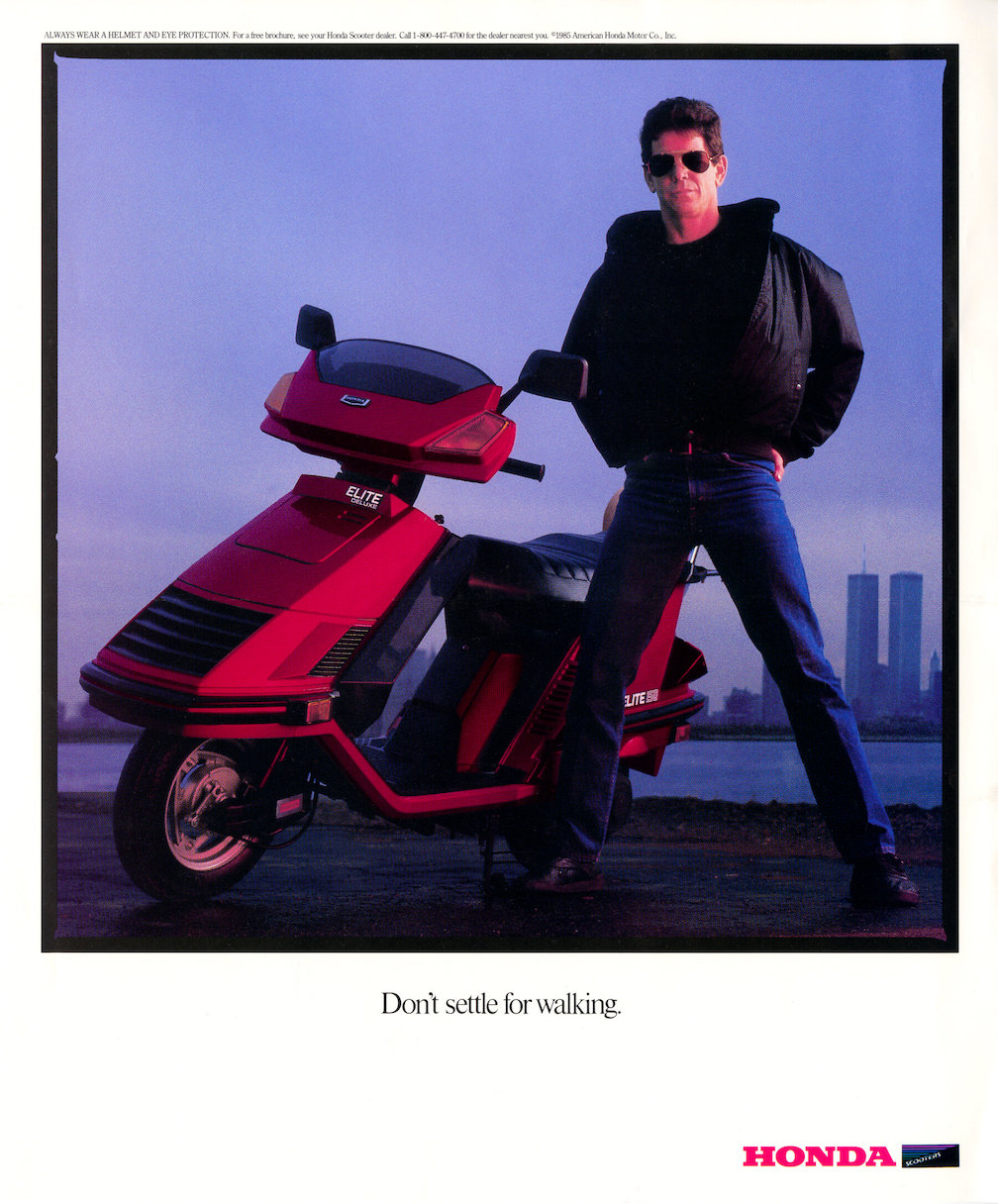
About the time Reed did the ad campaign for Honda, in 86 or so, he was asked to do something for a public service campaign for HIV prevention. He refused, saying he'd never been safe, and he was still alive.

I had dinner with Legs McNeil and a few others at some point in the mid 90s. It may have been after the premier of the film mentioned below. Or it could have been for Billy Name. Billy was there. McNeil went off on political punk. He hated it. He's a moralist.  Moralists are conservative by definition. Genet opposed prison reform because it made him who he was. I've said it before, in the same general context.  John Waters and Mike Kelley agreed, they both still loved the Catholic Church. John's a conservative. I've said that before too. And then there are the Quines 


It's still hard writing for an American audience.


The discussion of Dune and Star Wars among pseudo-leftist pundits is a corollary to Trumpist rage: varieties of childishness. And these overlap with the fanboys and fangirls of the cinematic fanboy Todd Haynes. The film critic on a website for "democratic socialists", named for anti-democratic moralists, violent political puritans, celebrates self-identified heirs of de Sade and Huysmans.

Haynes now has a tag. Haynes, Mad Men, and the nostalgia of Americans for their own childhood, or fantasies of others' youth. "They are not intellectuals, but occasionally dream that they will be. That is their secret ambition." 

Liberals and liberalism, and the whig history of the demimonde.

The Velvet Underground, like most of the self-identified avant-garde were pretentious. Pretension is defensive posturing, signaling insecurity. Lou Reed always got high on his own supply, and he was an asshole. But sometimes fuckups get something something right, describing complexity honestly, That's the basis of a large percentage of what's called "modern art". 

Picasso in 1906 is flying blind. In 1916 he's full of shit, a poseur, but still struggling. The need for easy answers, the indulgence in and struggle against kitsch, lying —to yourself and others—vs honesty,  becomes the conflict between art and pose, rebellion and its marketing.
All the albums I put out after this are going to be things I want to put out. No more bullshit, no more dyed hair, faggot junkie trip. I mimic me better than anyone else so if everybody else is making money ripping me off, I figure maybe I better get in on it. Why not? I created Lou Reed. I have nothing even faintly in common with that guy, but I can play him well, really well. 
All of this is in the context of conservatism, and an honesty that undermines intention. People who say "conservatism is the new punk rock" are right. Punk rock was always self-destructive.

I've repeated this quote from Candy Darling enough. “I’ve been up all night alone, wondering about my identity. Trying to look for an explanation for living this strange, stylized sexuality."

I'll add another, about the lover Reed dumped, from Please Kill Me: The Uncensored Oral History Of Punk.

p. 155

Eileen Polk: Everybody hung out at Max's, and then the New York Dolls played their famous show in drag at the 82 Club. I started hanging out there. The 82 Club was a famous drag-queen bar on Fourth Street, around the corner from CBGB's, which wasn't happening yet. I started going to the 82 Club real early on and made friends with all the drag queens. That's where I met Rachel, Lou Reed's girlfriend. Rachel was a drag queen who was very feminine and really nice. The drag queens liked me, but Rachel was especially nice. One night when she was really drunk she told me that she could never be a guy because she had such a small dick. Then she showed it to me, and it was really small. I said, "That's okay, Rachel. That's okay." And she said, "Well, it better be, because I make a better woman than I do a man."

Then she met Lou Reed, and he was the man of her dreams. Apparently it was love at first sight. Rachel told me, "I've met Lou Reed! I've made it! This is it! I knew this was gonna happen! Something good was gonna happen to me, and this is it and I'm in love!" She was just ecstatic.

Lou would just sit in the corner and Rachel would keep everyone away from him. She announced to everyone, "I don't want anyone near him. I don't want anyone to talk to him. He's mine." And everyone respected that at the 82 Club. All the other drag queens stayed away from him, and all the women did too. Rachel said, "He's mine," but she didn't threaten anybody. I felt like everybody wanted something good to happen for her. And when it did, everyone was happy.

p. 206 

Mary Harron: We all went off to the Locale and none of us had any money and we couldn't order food. I remember Lou Reed ordered a cheeseburger because I was so hungry. Lou was with Rachel, who was the first transvestite I'd ever met. Very beautiful, but frightening. But I mean definitely a guy: Rachel had stubble.

Legs and John were chatting with Lou so I sat next to Rachel, and I asked her what her name was—him, what his name was—and he said, "Rachel."

I thought, Right. That kind of shut me up for a bit. I think I actually sort of tried to make conversation with him, but Rachel wasn't talkative. I think that was the sum total of our conversation.

A review of Halston, on Netflix 

This is not a new lane for Murphy, and once again it seems revolutionary — how rare to make an entire five-episode series dedicated to amplifying such a sour, cynical note — until one realizes there is nowhere for this story to go. Certainly the notion that the modern history of gay life is one as colored by repression and self-loathing as much as by the power of expression is a rich vein throughout Murphy’s work. Just last year, he produced a feature film remake of “The Boys in the Band,” the 1968 play that is the ultimate theatrical howl of isolation and pain. Previously, Ben Platt in “The Politician” and Darren Criss in “The Assassination of Gianni Versace: American Crime Story” played queer men driven by ambition that looks a lot like misdirected rage.

I went to school with the director. He was a screenwriter for I shot Andy Warhol, directed by Mary Harron, quoted above. And both films have the same producer, Christine Vachon, who went to school with Haynes, and has worked him from the beginning of his career. One of my closest friends at the time was a consultant on the Warhol film; we went to the premiere. At some point after that I remember Callie saying, dryly, that it was still safe to assume every homosexual was self-hating until proven otherwise—for Boys in the Band see The Queer Art of Failure and How to be Gayboth from the second decade of this century. Vachon also worked with Cindy Sherman on her only, failed, film; Sherman's work documenting not homosexual but female self-hatred. The absurdity is the lie they tell themselves—if indeed they do—that they're liberal. Maybe it's more that earnest liberals claim them as their own. Liberalism has turned self-hatred, for some, into self-affirmation.

And this brings us back to science fiction,  the geek art of failure unacknowledged, building worlds rather than observing this one. 

Krugman in 2021

The blogger John Rogers once noted that there are two novels that can shape the lives of bookish 14-year-olds: “Atlas Shrugged” and “The Lord of the Rings.” One of these novels, he asserted, is a childish fantasy that can leave you emotionally stunted; the other involves orcs.

Well, I was a bookish 14-year-old, but my touchstones were two different novels: Isaac Asimov’s “Foundation” and Frank Herbert’s “Dune.”

Many social scientists, it turns out, are science fiction readers. For example, quite a few experts on international relations who I know are fanatics about the TV version of “The Expanse.” I think it’s because good science fiction involves building imaginary worlds that are different from the world we know, but in interesting ways that relate to the attempt to understand why society is the way it is.

 Angus Deaton, Dani Rodrik and John Quiggin, and Krugman in 1996

At the deepest level, opposition to comparative advantage -- like opposition to the theory of evolution -- reflects the aversion of many intellectuals to an essentially mathematical way of understanding the world. Both comparative advantage and natural selection are ideas grounded, at base, in mathematical models -- simple models that can be stated without actually writing down any equations, but mathematical models all the same. The hostility that both evolutionary theorists and economists encounter from humanists arises from the fact that both fields lie on the front line of the war between C.P. Snow's two cultures: territory that humanists feel is rightfully theirs, but which has been invaded by aliens armed with equations and computers.

Any systems engineer knows that efficiency in a system is in inverse proportion to stability.

Krugman indulged a fantasy; his preferences were founded in aesthetics before they were founded in ethics: he rationalized a desire, wanted to believe an absurdity, defended it as science and mocked anyone who opposed him as irrational. 

The only thing interesting is that he didn't learn from his mistakes.

How is the philosophy behind Asimov's Foundation less authoritarian than The Fountainhead? Krugman conflates art and illustration, and art and science, "truth and lies".  His link on The Expanse is to Drezner, indulging the horse-race model of political science and IR, the academic origin of the model of journalistic "objectivity" and passivity. Both Krugman and Drezner imagine statements without subtext, themselves without subtext. Their intellects are brittle, though Krugman is "intelligent". The only thing interesting about Dune is how it describes the desires and fantasies of its makers and its audience, and civilization on earth in 2021.

Tagged The Pictures Generation, the aestheticized politics of 80s art, made in the shadow of something worshipped and feared—hated—indulging reaction as radical. That's the mix that turns conservatism into fascism.  Needless to say I have more sympathy for Candy Darling and Rachel Humphreys, who's buried in Potter's Field, than Lou Reed. I have sympathy for them as people.

I want the illusion.
Do you want the illusion or do you want the illusion to be real? 
What’s the difference?
One means that you have an appreciation of the arts. The other means that you’re a fascist.
Art makes the world more interesting than it is. "We tell ourselves stories in order to live."
Living your life as art, and imposing your art on others is more than authoritarianism. Authoritarianism only demands that you behave a certain way. It doesn't demand that you believe. Coerced belief is the definition of fascism. I think Foucault was trying to construct a new conservatism. Neoliberalism ain't it.
[I've used this one before.]


I've made so many riffs on monarchists and monarchism, on liberalism, on the left, and right.
Jean-Marie Straub's film, below, was on Jonathan Rosenbaum's top 10 for 2020. In the link above [reaction as radical] he refers to Sirk and Fassbinder as "more defeatist than progressive". The man in Straub's film is reciting Georges Bernanos. It's hard to get more defeatist than Bernanos. The film is dedicated to Godard.

Thursday, May 06, 2021

BREAKING:

New Brooklyn Intellectuals Accuse Old Upper West Siders of CAREERISM
Louis Menand’s big new book on art, literature, music, and thought from 1945 to 1965 instills the conviction that the 20th century is well and truly over. It seems like the right gift for the graduating college senior this year. Born in 2000, the proud degree-holder may not recognize the Jackson Pollock reproduced on the accompanying congratulations! card, or know the Allen Ginsberg lines misquoted in the commencement speech, but can look them up in The Free World: Art and Thought in the Cold War and confirm that this past is truly past. 

An old friend's comment after being stuck in Park Slope for an afternoon 20 years ago. "We're so liberal we live in Brooklyn."

Menand

I do not like the critical language of approval and disapproval. I always felt there was a lot of moral righteousness among the critics of that period. I can’t think that way. I want to empathize (not sympathize) with the people I’m writing about, to get inside them. You do learn their limitations that way, and in that sense you are rendering a judgment, but your job is to, in the words of Howard Cosell, “Tell it like it is.” You want to help readers think without telling them what to think.

Howard Cosell fits John Roberts' model for Justice of the Supreme Court, or Jack Webb's cop. A historian looks for the origins of moral imperatives. It's not a book about the work; it's a book about the only thing the readers care about: careers. Everything about reinforcing the opinions of the present. It's the same with Roth. Kazin: "Art is good for you". Kazin again, and Lawrence: "The American has got to destroy..." The intellectual class of the US really is reliving the most provincial aspects of the post-war era. 

Greif's comments about Rauschenberg and Warhol are pathetic. Reading the interview with Menand I can't imagine the book's any better. 
update: I was right. I have a Warhol tag, but this is enough. Click through. 

There's plenty to criticize in Clark. He works too hard, pushes too much. He wants to defend Modernism rather than simply describe it; it becomes a complex description more than a description of a complex thing.  Still...

Clark, Farewell to an Idea: Episodes from a History of Modernism

But I anticipate. For the time being, all that needs to be established is that Pollock's drip paintings, when they started, and maybe even as they continued, were alternately Alchemy and Sea Change - Alchemy always failing, Sea Change never. The pictures were dazzling ("almost too dazzling to be looked at indoors," wrote Clement Greenberg of one of them at the time). They were lordly and playful, like something a master had thrown off. Magic Mirrors. Shooting Stars. Enchantment was part of them. And this seems to me true of modernism in general. Of Sweeney Agonistes as much as of Harmonium, of Picasso as much as of Matisse. An art of high negativity - books about nothing, paintings done with consciousness deliberately on hold - is not necessarily anarchical, scabrous, or otherwise low. On the contrary, it has often come out of courtly surroundings. Dukes have gone in for it, on horseback, as part of their general "contempt for nature in all its particularity." Negation is stylish. For stylish, at certain moments, read fashionable.

Scent. So it proved in Pollock's case. On 1 March I951, Vogue magazine published four pages of photographs, black and white and color, by Cecil Beaton (figs. In and I78). In them Irene and Sophie showed off a range of the season's evening dresses in front of pictures by Pollock from a show just closed at Betty Parsons. Beaton had ideas about how the pictures and dresses matched. He reveled in the analogy between Lavender Mist's powdery transparency - or the transparency his lighting gave it - and that of the chiffon and fan. The fan struck a Whistlerian note. He tweaked Irene's black cocktail dress into a to and fro of diagonals which made it quite plausibly part of Pollock's Autumn Rhythm behind. And so on. The effects are not subtle, and did not need to be. Hedging his bets just a little, the Vogue subeditor informed readers that "the dazzling and curious paintings of Jackson Pollock, which are in the photographs on these four pages, almost always cause an intensity of feelings." 

Vogue in the 1940s and 1950s was not to be sniffed at. It sold copies and was on Pollock's side. The magazine had printed a full-color photo of Reflection ol the Big Dipper as early as April 1948, the first time a drip painting was reproduced in color (beating Life with Cathedral by a full six months). Financially speaking, early 1951 was not a very good moment for Pollock: he was waiting for his contract with Betty Parsons to expire, and broke with her once it did; nobody seems to have made much money out of the show the previous December - the one Beaton used - and in any case Pollock had a reputation for working the media when he had a chance (Mark Rothko to Barnett Newman in I946: "Pollock is a self contained and sustained advertising concern"). His tone when he mentioned the Vogue event to Alfonso Ossorio in February was matter of fact: "This issue of Vogue has three pages of my painting (with models of course) will send a copy." These things happen. They help a bit. "There is an enormous amount of interest and excitement for modern painting there [he means in the wider America] - it's too damn bad Betty doesn't know how to get at it."

Taken on their own, the Vogue photographs are slippery evidence. They are falsely conclusive, like the formal analogies Beaton went in for. I did not quote Rothko to Newman thinking the photographs just proved Rothko's point. Certainly they suggest some of the terms of Pollock's reception in his own time. But the fact that Vogue was a fashion magazine does not mean that paintings appearing in its pages were, or became, fashionable. Fashion is a fragile construction, which regularly feeds on its opposites. The opposites often stay much as they were. Beaton in 1951 occupied a particular (lordly) place in the culture industry. His photos were meant to produce a slight intake of breath. And in any case, there is always the option open to us of dismissing the Beaton episode altogether, at least as evidence about Pollock. I remember seeing the model in front of Autumn Rhythm for the first time in a lecture, and thinking it made a powerful point, but then afterwards having the comment reported back to me: "So the Pollocks got used as background in a fashion magazine. We all know that by now. So what?"

There is a phrase that sticks in my mind from a similar conversation about the work of Serge Guilbaut - about his book How New York Stole the Idea of Moden Art - to the effect that his account of Pollock and Abstract Expressionism amounted in the end to an exercise in "guilt by vague association." For is not any art of real complexity (this is the implication) fated to be used, recruited, and misread? What are we supposed to say, for example, about a photo of Mussolini's shocktroops running in formation through the Arch of Constantine? (This too I saw in a lecture, at much the same moment as the Beaton images, and the comparison struck home.) Are we to put the blame on the Arch, somehow? Pretend that the Fascists got Roman architecture right? (To which the reply might reasonably be, in fact: Are you saying they got it wrong? What, after all, was the Arch of Constantine for?)

"Dukes have gone in for it, on horseback" Clark's making a reference to a few pages earlier. It's here, and of course here

Warhol wasn’t the first American artist whose work got cleaned up to make it palatable, and he wasn’t the first to play both sides. As Rothko put it: “Pollock is a self contained and sustained advertising concern.” A salaryman’s alienation was everywhere in Rauschenberg’s greatest early combines; Monogram and Bed are so violently anarchic that they remain unrecoverable by any but the most sophisticated polite imagination. They come from the same world as Death of a Salesman and A Streetcar named Desire, and are crueler than either. But Rauschenberg’s process quickly became aestheticized, while Rothko’s interests, like Pollock’s, were in the “Tragic and Timeless” and grandeur’s raison d’etre as Cecil Beaton understood, is reassurance. Pollock understood that too, better than Rothko. 

And as long as I'm at it,  from 2008. Klub Kids and Philosophers.

more from Menand.
---
2024. jumping forward to jump back. Gary Indiana on Blake Gopnik.