Showing posts with label The Pictures Generation. Show all posts

Friday, October 29, 2021

Updated, for fun this time.

Reed wrote songs about junkies on the corner.
"You know. I'm glad that we met man
It was really nice talking

And I really wish there was a little more time to speak"
Every time I hear that voice I think of a man I knew 35 years ago. I hear Jimmy Santulli, alias James Jubert. I'm pretty sure he's been dead for a long time. 
"Weird Alex" Pareene is weird in his own little world.
 

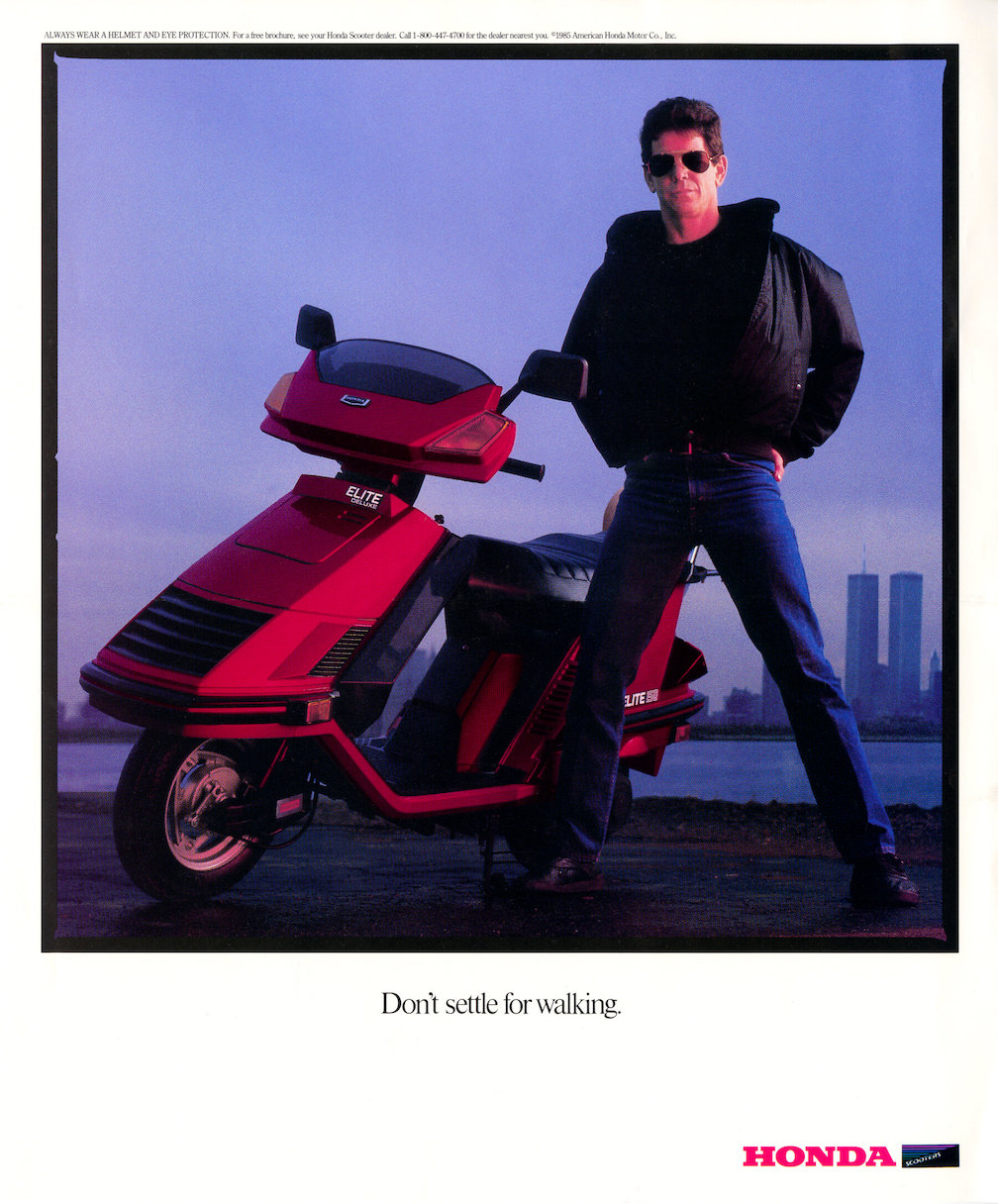
About the time Reed did the ad campaign for Honda, in 86 or so, he was asked to do something for a public service campaign for HIV prevention. He refused, saying he'd never been safe, and he was still alive.

I had dinner with Legs McNeil and a few others at some point in the mid 90s. It may have been after the premier of the film mentioned below. Or it could have been for Billy Name. Billy was there. McNeil went off on political punk. He hated it. He's a moralist.  Moralists are conservative by definition. Genet opposed prison reform because it made him who he was. I've said it before, in the same general context.  John Waters and Mike Kelley agreed, they both still loved the Catholic Church. John's a conservative. I've said that before too. And then there are the Quines 


It's still hard writing for an American audience.


The discussion of Dune and Star Wars among pseudo-leftist pundits is a corollary to Trumpist rage: varieties of childishness. And these overlap with the fanboys and fangirls of the cinematic fanboy Todd Haynes. The film critic on a website for "democratic socialists", named for anti-democratic moralists, violent political puritans, celebrates self-identified heirs of de Sade and Huysmans.

Haynes now has a tag. Haynes, Mad Men, and the nostalgia of Americans for their own childhood, or fantasies of others' youth. "They are not intellectuals, but occasionally dream that they will be. That is their secret ambition." 

Liberals and liberalism, and the whig history of the demimonde.

The Velvet Underground, like most of the self-identified avant-garde were pretentious. Pretension is defensive posturing, signaling insecurity. Lou Reed always got high on his own supply, and he was an asshole. But sometimes fuckups get something something right, describing complexity honestly, That's the basis of a large percentage of what's called "modern art". 

Picasso in 1906 is flying blind. In 1916 he's full of shit, a poseur, but still struggling. The need for easy answers, the indulgence in and struggle against kitsch, lying —to yourself and others—vs honesty,  becomes the conflict between art and pose, rebellion and its marketing.
All the albums I put out after this are going to be things I want to put out. No more bullshit, no more dyed hair, faggot junkie trip. I mimic me better than anyone else so if everybody else is making money ripping me off, I figure maybe I better get in on it. Why not? I created Lou Reed. I have nothing even faintly in common with that guy, but I can play him well, really well. 
All of this is in the context of conservatism, and an honesty that undermines intention. People who say "conservatism is the new punk rock" are right. Punk rock was always self-destructive.

I've repeated this quote from Candy Darling enough. “I’ve been up all night alone, wondering about my identity. Trying to look for an explanation for living this strange, stylized sexuality."

I'll add another, about the lover Reed dumped, from Please Kill Me: The Uncensored Oral History Of Punk.

p. 155

Eileen Polk: Everybody hung out at Max's, and then the New York Dolls played their famous show in drag at the 82 Club. I started hanging out there. The 82 Club was a famous drag-queen bar on Fourth Street, around the corner from CBGB's, which wasn't happening yet. I started going to the 82 Club real early on and made friends with all the drag queens. That's where I met Rachel, Lou Reed's girlfriend. Rachel was a drag queen who was very feminine and really nice. The drag queens liked me, but Rachel was especially nice. One night when she was really drunk she told me that she could never be a guy because she had such a small dick. Then she showed it to me, and it was really small. I said, "That's okay, Rachel. That's okay." And she said, "Well, it better be, because I make a better woman than I do a man."

Then she met Lou Reed, and he was the man of her dreams. Apparently it was love at first sight. Rachel told me, "I've met Lou Reed! I've made it! This is it! I knew this was gonna happen! Something good was gonna happen to me, and this is it and I'm in love!" She was just ecstatic.

Lou would just sit in the corner and Rachel would keep everyone away from him. She announced to everyone, "I don't want anyone near him. I don't want anyone to talk to him. He's mine." And everyone respected that at the 82 Club. All the other drag queens stayed away from him, and all the women did too. Rachel said, "He's mine," but she didn't threaten anybody. I felt like everybody wanted something good to happen for her. And when it did, everyone was happy.

p. 206 

Mary Harron: We all went off to the Locale and none of us had any money and we couldn't order food. I remember Lou Reed ordered a cheeseburger because I was so hungry. Lou was with Rachel, who was the first transvestite I'd ever met. Very beautiful, but frightening. But I mean definitely a guy: Rachel had stubble.

Legs and John were chatting with Lou so I sat next to Rachel, and I asked her what her name was—him, what his name was—and he said, "Rachel."

I thought, Right. That kind of shut me up for a bit. I think I actually sort of tried to make conversation with him, but Rachel wasn't talkative. I think that was the sum total of our conversation.

A review of Halston, on Netflix 

This is not a new lane for Murphy, and once again it seems revolutionary — how rare to make an entire five-episode series dedicated to amplifying such a sour, cynical note — until one realizes there is nowhere for this story to go. Certainly the notion that the modern history of gay life is one as colored by repression and self-loathing as much as by the power of expression is a rich vein throughout Murphy’s work. Just last year, he produced a feature film remake of “The Boys in the Band,” the 1968 play that is the ultimate theatrical howl of isolation and pain. Previously, Ben Platt in “The Politician” and Darren Criss in “The Assassination of Gianni Versace: American Crime Story” played queer men driven by ambition that looks a lot like misdirected rage.

I went to school with the director. He was a screenwriter for I shot Andy Warhol, directed by Mary Harron, quoted above. And both films have the same producer, Christine Vachon, who went to school with Haynes, and has worked him from the beginning of his career. One of my closest friends at the time was a consultant on the Warhol film; we went to the premiere. At some point after that I remember Callie saying, dryly, that it was still safe to assume every homosexual was self-hating until proven otherwise—for Boys in the Band see The Queer Art of Failure and How to be Gayboth from the second decade of this century. Vachon also worked with Cindy Sherman on her only, failed, film; Sherman's work documenting not homosexual but female self-hatred. The absurdity is the lie they tell themselves—if indeed they do—that they're liberal. Maybe it's more that earnest liberals claim them as their own. Liberalism has turned self-hatred, for some, into self-affirmation.

And this brings us back to science fiction,  the geek art of failure unacknowledged, building worlds rather than observing this one. 

Krugman in 2021

The blogger John Rogers once noted that there are two novels that can shape the lives of bookish 14-year-olds: “Atlas Shrugged” and “The Lord of the Rings.” One of these novels, he asserted, is a childish fantasy that can leave you emotionally stunted; the other involves orcs.

Well, I was a bookish 14-year-old, but my touchstones were two different novels: Isaac Asimov’s “Foundation” and Frank Herbert’s “Dune.”

Many social scientists, it turns out, are science fiction readers. For example, quite a few experts on international relations who I know are fanatics about the TV version of “The Expanse.” I think it’s because good science fiction involves building imaginary worlds that are different from the world we know, but in interesting ways that relate to the attempt to understand why society is the way it is.

 Angus Deaton, Dani Rodrik and John Quiggin, and Krugman in 1996

At the deepest level, opposition to comparative advantage -- like opposition to the theory of evolution -- reflects the aversion of many intellectuals to an essentially mathematical way of understanding the world. Both comparative advantage and natural selection are ideas grounded, at base, in mathematical models -- simple models that can be stated without actually writing down any equations, but mathematical models all the same. The hostility that both evolutionary theorists and economists encounter from humanists arises from the fact that both fields lie on the front line of the war between C.P. Snow's two cultures: territory that humanists feel is rightfully theirs, but which has been invaded by aliens armed with equations and computers.

Any systems engineer knows that efficiency in a system is in inverse proportion to stability.

Krugman indulged a fantasy; his preferences were founded in aesthetics before they were founded in ethics: he rationalized a desire, wanted to believe an absurdity, defended it as science and mocked anyone who opposed him as irrational. 

The only thing interesting is that he didn't learn from his mistakes.

How is the philosophy behind Asimov's Foundation less authoritarian than The Fountainhead? Krugman conflates art and illustration, and art and science, "truth and lies".  His link on The Expanse is to Drezner, indulging the horse-race model of political science and IR, the academic origin of the model of journalistic "objectivity" and passivity. Both Krugman and Drezner imagine statements without subtext, themselves without subtext. Their intellects are brittle, though Krugman is "intelligent". The only thing interesting about Dune is how it describes the desires and fantasies of its makers and its audience, and civilization on earth in 2021.

Tagged The Pictures Generation, the aestheticized politics of 80s art, made in the shadow of something worshipped and feared—hated—indulging reaction as radical. That's the mix that turns conservatism into fascism.  Needless to say I have more sympathy for Candy Darling and Rachel Humphreys, who's buried in Potter's Field, than Lou Reed. I have sympathy for them as people.

I want the illusion.
Do you want the illusion or do you want the illusion to be real? 
What’s the difference?
One means that you have an appreciation of the arts. The other means that you’re a fascist.
Art makes the world more interesting than it is. "We tell ourselves stories in order to live."
Living your life as art, and imposing your art on others is more than authoritarianism. Authoritarianism only demands that you behave a certain way. It doesn't demand that you believe. Coerced belief is the definition of fascism. I think Foucault was trying to construct a new conservatism. Neoliberalism ain't it.
[I've used this one before.]


I've made so many riffs on monarchists and monarchism, on liberalism, on the left, and right.
Jean-Marie Straub's film, below, was on Jonathan Rosenbaum's top 10 for 2020. In the link above [reaction as radical] he refers to Sirk and Fassbinder as "more defeatist than progressive". The man in Straub's film is reciting Georges Bernanos. It's hard to get more defeatist than Bernanos. The film is dedicated to Godard.

Friday, December 14, 2018

 etc., etc.

Whatever Greenwich Village may once have been or may now be supposed to have been, anyone who has recently strayed down MacDougal Street on a Saturday night knows that now it is a playground. What Coney Island was once to the honest workingman, Greenwich Village is now to the unmarried or ex-married young professional. The Village streets, pads, coffee houses, and bars are jammed with people who look a million times more sensitive, artistic, and "interesting" than William Faulkner or Igor Stravinsky, but who live by teaching economics, analyzing public opinion, writing advertising copy, practicing psychoanalysis, or "doing research" for political candidates. They are not intellectuals, but occasionally dream that they will be. That is their secret ambition. Meanwhile, being young and frisky, they are not yet the "managers" in our highly organized technical society. But they have the skills someday to become managers. Just now they don't want power any more than they want marriage. They want a good time, and a good time is what they go to the Village for, and a good time in the Village is what they get. [i]
“The Village Today: or The Music the Money Makes” Alfred Kazin, in 1960 reviewing a book of Village Voice columns by Bill Manville.  Kazin like MacDonald, a writer from the older tradition, not an academic, a reader of literature not strictly newspapers and social science, a friend of Arendt, still a humanist, a reader for subtext, of the words on the page and not only the arguments they’re claimed to make. “They are not intellectuals, but occasionally dream that they will be. That is their secret ambition.”.  My mother divorced her first husband, she said, because he didn’t understand the tragedy of life. He was an optimist.  He went on work in the White House flacking the Great Society and the Vietnam war. And now almost 60 years later a college graduate with the same optimism can designate himself a “public intellectual” and people will take him at his word. 
Mad Men is a flat screen Disney World for people who grew up on reruns, made by suburban infants of the 60s for an audience of the suburban infants in the 70s and 80s. It’s dirty and sterile. Todd Haynes’ films, the older highbrow version of this are a mashup of Douglas Sirk and Ozzie and Harriet, second hand history and fetishist misogyny. The real subject of course is always the present, but the present is embalmed too, and that specifically is not the subject. There’s so much art, meaning artifice, there’s no room to breathe, and darkness is twisted through technical mastery that the end is not less observation than projection. Haynes' films are worse than a bad Coen brothers film, crueler, because no strained attempt at comedy, just Americans finding ways to avoid responsibility while watching other people fuck up. But there are also good Coen brothers films, and The Wire and Breaking Bad and The Sopranos, and like Warhol, those are black as pitch.   
“Mailer was a left conservative.”[ii]Didion was a Goldwater Girl. MacDonald mocked his own past as a Trotskyite. Liebling, Herr and Page lived through extremes, You can indulge as a craftsman and admit that you’re indulging; you can fight so much to deny something that it shows up in everything you do, but art doesn’t work as symptom. It needs to be made so that someone without the fixations can feel their pull. Works can be  popular when they’re made because the tastes, desires and fears, are common. That doesn’t mean the work will last.  Haynes and Matthew Weiner are like Talese and Wolfe. The perversity is as clear as the desperation to avoid the subject. The problem isn’t the kink; it’s the dishonesty. Didion indulges journalistic sleaze. She’s a voyeur, passive, condescending, but she’s cruel to herself too. That’s enough to keep your sympathy. Art is conservative, or it’s reactionary.

[i]Alfred Kazin, “The Village Today: or The Music the Money Makes”, in Contemporaries, Atlantic-Little Brown, 1962
[ii]  Norman Mailer, The Armies of the Night, Penguin, 1995 

Sunday, February 26, 2017

Another gallery closing

Moving faster and faster.

"The Fine Arts section of the Times has been shrinking for years. It's half the size it was even 10 years ago."

"'Weekend Arts: Fine Arts/Leisure' Today it came to 10 pages. Weekend Arts: Movies/Performances is 24."

In 2009? I was introduced to a small but respected younger dealer. I said I didn't follow recent contemporary art much. He said "I don't blame you".

There's been a slow regrouping of post-war art in the US, going against the standard American bias, early on with Manzoni, putting him on par with Rauschenberg and Johns, more recently with the Zero Group.  In 2012 MoMA mounted an exhibition of works from the Japanese post war avant-garde,  Tokyo 1955–1970. Culture follows the economy

Until the last few years Arte Povera, was the only non-US post-war accepted in the US as equal or nearly equal in stature to the American equivalents, the Minimalists and Post-Minimalists. But even then the Pistoletto exhibition in NY in 1988 became a scandal in Europe for being in a secondary institution, sloppily organized and in spaces without climate control. There was shock at how many of the pieces came back damaged. At this point the market is so starved for new work that can be seen and made to be seen as interesting that larger contemporary galleries have become  "rediscovery" of minor or forgotten artists and packaging them.

http://www.levygorvy.com/exhibition/willem-de-kooning-zao-wou-ki

The larger contemporary galleries more and more have been going into the archives.

Thursday, November 10, 2016

I'd put in a new post, but it's a perfect introduction to the post below. Even American historians have no sense of history. It's pathetic. "The American has got to destroy. It is his destiny"
Tocqueville was an adult, writing about children. And the children of those children produced more children.

Some images from The Vulgarians, by Robert Osborn, published in 1960. Full text and images available here.  I still have my parents' copy. It's moralizing, so childish too.


A paragraph from 2013 on Daniel Mendelsohn's review of Mad Men: Mendelsohn reminded me of graduates of Wellesley who were pissed off by Mona Lisa Smile (since Alfred Barr taught the first academic course on Modern Art at Wellesley in 1926), and my mother's contempt for Todd Haynes for Far From Heaven. Haynes doing his best to undermine the world of Ozzie and Harriet that only 6 year olds at the time confused with reality. Homosexuality and interracial sex? Of course.

Harriet Nelson started smoking at 13, and hung out at the Cotton Club

Mendelsohn
Since the summer of 2007, when Mad Men premiered on the cable station AMC, the world it purports to depict—a lushly reimagined Madison Avenue in the 1960s, where sleekly suited, chain-smoking, hard-drinking advertising executives dream up ingeniously intuitive campaigns for cigarettes and bras and airlines while effortlessly bedding beautiful young women or whisking their Grace Kelly–lookalike wives off to business trips in Rome—has itself become the object of a kind of madness.
His exchange with Molly Haskel is fun. Interesting to remember that Mendelsohn is a famously a fan of historical fiction. He must have written about his argument with James.

To the Editor:
Re "Young Ladies on the Verge of a Breakthrough" by Katha Pollitt [Dec. 21]:

I was a student at Wellesley during the period of "Mona Lisa Smile," studying art history and later becoming a professor of art. The film presents art classes at Wellesley in the 1950's as needing shaking up; in one scene the president of the college warns the Julia Roberts character, "A little less modern art, Miss Watson."

Quite ludicrous. Wellesley pioneered the study of modern art. Alfred H. Barr Jr., a professor of art at Wellesley in the 1920's, later became the first director of the Museum of Modern Art in New York. He introduced the Bauhaus to the public in a landmark exhibition at the Modern in 1938 — years after Wellesley women studied it. When I began to teach art history, I unearthed my Wellesley notebooks as a resource, and I have them here now. I am happy (but not surprised) to see that an entry for Jan. 27 — the year would have been 1953 or 1954 — shows Jackson Pollock, Arshile Gorky and Mark Tobey. Earlier sections on Picasso, Cézanne and van Gogh note assigned reading in Barr, Greenberg and The Partisan Review. We did not paint by the numbers, one of many unfortunate misrepresentations of Wellesley by this film.
VIRGINIA SMITH
Manhattan
---
related 11/20 Alfred Kazin in 1960: "Whatever Greenwich Village may once have been or may now be supposed to have been,..."

Sunday, May 01, 2016

Looking over the responses to the show at MoMA,  people miss the most obvious points. Degas and Turner were trained and successful academic painters who later moved into near abstraction, but Degas was a painter for the age of mechanization. Turner may have ridden trains and painted pictures of them, but his process was anti-mechanical.

 "Heads of a Man and a Woman (Homme et femme, en buste)". c. 1877–80. Monotype on paper, plate: 2 13/16 x 3 3/16” (7.2 x 8.1 cm) . British Museum, London.

Degas was a painter after photography. His blurring is the blurring of motion in a photographic image. His technics is touched by the mechanization of Seurat.

Three Studies of Ludovic Halévy Standing, c. 1876-1877, Charcoal on paper, 12 5/8 x 18 7/8" (32 x 48 cm),
National Gallery of Art, Washington D.C. 
Three Studies of Ludovic Halévy Standing, c. 1876-1877, Charcoal on paper, counterproof,
14 1/8 x 19 1/4" (35.9 x 48.9 cm), National Gallery of Art, Washington D.C. 
He escapes the overdetermined by means of the underdetermined. He undercuts staid academicism not with relaxation but randomness. His work is never casual; it's observational and formalist. He's a conservative, and idealism can't be read into the work after the fact. He's not a painter against 19th century narrative tradition; he's not a Modernist; he's modern, with a connection to the present even greater than Manet, to the age of mechanical representation by way of Renoir (father and son), Jean Vigo, and Mizoguchi, to contemporary academic figuration, Jeff Wall and Thomas Struth, and Richter, and to abstraction by way of Seurat, to Gursky and to Richter again. Needless to say the big contemporary names stand in for the wide number of people with similar preoccupations, for whatever reason.

As I've said, Modernism is dead, modernity isn't.
"Forest in the Mountains (Forêt dans la montagne)” (c. 1890),monotype
in oil on paper, plate: 11 13/16 x 15 3/4 inches, MoMA, New York.
New and overdue tag for Degas

Sunday, October 18, 2015

Varieties of pathological self-loathing. Hal Foster. (updating) more for the book.
Some of these speculations can be tested against Life Style by Bruce Mau, a compendium of projects by the Canadian designer who came to prominence with Zone Magazine and Books in the late 1980s. With a distinguished series of publications in classical and vanguard philosophy and history, this imprint is also known for "Bruce Mau Design," whose luscious covers with sumptuous images in saturated colors and layered pages with inventive fonts in cinematic sequencing have greatly influenced North American publish- ing. Sometimes Mau seems to design the publications to be scanned, and despite his frequent denials in Life Style he tends to treat the book as a design contract more than an intellectual medium.

...Yet for all the Situationist lingo of contemporary designers like Mau, they don't "detourn" much; more than critics of spectacle, they are its surfers (which is indeed a favorite figure in their discourse), with "the status of the artist [and] the pay- check of the businessman." "So where does my work fit in?" Mau asks. "What is my relationship to this happy, smiling monster? Where is the freedom in this regime? Do I follow Timothy Leary and 'tune in, turn on, drop out?' What actions can I commit that not be absorbed? Can I outperform the system? Can I win?" Is he kidding?
The discussion of Bruce Mau takes up the last five pages of the essay, with no mention of Foster as the founding editor at Zone and still on the masthead, as one of four.

Found via an interview with Douglas Crimp.
The Buren piece turned out to be my take on the current animus toward design, for example in Hal Foster’s book Design and Crime (2002). I juxtaposed the stories of my two first jobs in New York. One was working at the Guggenheim, the other is something people in the art world would not know about: I worked very briefly for the fashion designer Charles James. He was the greatest American couturier in the ’30s, ’40s and ’50s. I was hired to help him organize his papers to write his memoirs, which he never did. If you were in the fashion world and I told you I worked for Charles James, your eyes would pop out of your head. It would be like saying I was working for Balenciaga or Christian Dior. Charles James was the American equivalent of a Balenciaga or a Dior, and in fact both of those designers revered James. He was also revered by people in the art world. My discussion of James focuses ultimately on his decor for a house that Phillip Johnson designed in 1949-50 for Jean and Dominique de Menil, the Houston art patrons (the Menil Collection is one of the great museums of modern art in America). Johnson designed a Miesian-style modernist house, but James created an over-the-top, queeny decor for the interior. It was so extreme that Johnson actually disavowed the house. So this chapter of my memoir is largely about decor and modernism, about what I call “the decorative unconscious” of modernism. 
So what I’m attempting to do is to use these stories about myself as a way of thinking about issues in contemporary art – with a particular emphasis on the queering of art discourse, in this case, unmasking the fear of the feminine, the fear of the effeminate, in high modernist discourse, which is now represented by the journal October.
Crimp and Foster are equally perverse. Crimp was one of the founding editors of October. He argues as a man in a black leather jacket, for "the feminine", citing Daniel Buren and his friendship with Yvonne Rainer, the puritan moralist of postmodern dance.

I saw Longo give the fascist salute playing with Rhys Chatham at one of Longo's openings at Metro Pictures in the mid 80s. Someone threw a beer at him and a few others booed. I remember a teacher and critic walking into a group show at Metro a couple of years before and rasping, "This is fascism!" and storming out.  It cleared my head. I knew he was right but I wasn't sure how.

Foster quotes Adolf Loos attacking Art Nouveau
Each room formed a symphony of colors, complete in itself. Walls, wall coverings, furniture, and materials were made to harmonize in the most artful ways. Each household item had its own specific place and was integrated with the others in the most wonderful combinations. The architect has forgotten nothing, absolutely nothing. Cigar ashtrays, cutlery, light switches - everything, everything was made by him.
This Gesamtkunstwerk does more than combine architecture, art, and craft; it commingles subject and object: "the individuality of the owner was expressed in every ornament, every form, every nail." For the Art Nouveau designer this is perfection: "You are complete!" he exults to the owner. But the owner is not so sure: this completion "taxed [his] brain." Rather than a sanctuary from modern stress, his Art Nouveau interior is another expression of it: "The happy man suddenly felt deeply, deeply unhappy ... He was precluded from all future living and striving, developing and desiring. He thought, this is what it means to learn to go about life with one's own corpse. Yes indeed. He is finished. He is complete!"
No mention of A Rebours, or why Viennese kitsch is death while Catalan Modernism is not.

Crimp is the one of the curators of MoMA PS1's Greater New York for 2015.  I'd thought he was the only curator but the other curators seem to be following his lead: it's an exercise in nostalgia for Crimp's heyday. The younger artists, born in the 80s, seem chosen for cribbing from his past, and the older ones are secondary figures if that, though a few are good to see. Recently I saw Robert Kushner interviewed, informally, as an old friend, by the man who walked out of the Metro show in disgust.

Friday, September 25, 2015

Toni Morrison, grande dame of African-American literature, proclaimed Coates the intellectual heir to James Baldwin.
She called Bill Clinton "the first Black president".
Tim Russert told me that, according to his sources, Bill Clinton, in an effort to secure an endorsement for Hillary from Ted Kennedy, said to Kennedy, “A few years ago, this guy would have been carrying our bags.”
Baldwin wouldn't have put up with this, but he was more sophisticated. That's where we are. It's sad.
But then, just as he had much of America listening to him, Coates decided to move to Paris for a year. He had discovered the city relatively recently, not having travelled abroad until well into adulthood. “The first time I came here,” he admits, “I guess I felt sort of stupid for falling in love right away. It was like I have become the writer stereotype. Sometimes I feel like a total cliché for the affection I feel.” 
Glou, the restaurant he has chosen, is known for the freshness of its ingredients. “We’ve been here a month; I’ve been here 10 times,” he says. Upstairs, the window is open on to the Picasso museum’s stately back garden, where teenagers are playing football.
A gentle and courteous presence, Coates shows none of the cold anger of the pages of Between the World and Me.

...We place our orders, starting with a shared plate of seafood tapas and a glass of wine each. His restaurant French (arguably the essential level for foreigners) is serviceable.
He was a protege of David Carr
In the 1990s, Coates met his professional mentor: David Carr, the New York Times journalist who died unexpectedly at the age of 58 in February. When they met, Carr was editing Washington City Paper. “There isn’t a dude outside my dad who had greater influence on my life,” Coates says. He still instinctively talks about Carr in the present tense: “He’s also just a tremendous friend; I can talk to David about anything — my kid, my marriage, delinquent taxes. 
“When I met him I was 20. I had only the vaguest sense of what writing was; I had been a failing student, I was not sure I was going to do anything with my life. I sent him some poetry. He called and said, ‘Take this internship.’ I was expecting what they called ‘scut work’, running around doing a bunch of shit for other people. But they were like: ‘Go find stories.’ When I came to David, I wanted to be an essayist, writing music reviews and giving my take on things. He wasn’t having that. You had to go out and report on the city, talk to people. He used to tell me: ‘Tell stories, less of the theory.’”
"I wanted to be an essayist,.." "Tell stories, less of the theory."
Baldwin was an essayist; he had no interest in theory.

Carr's other famous protege, Lena Dunham
Three years ago, New York Times media reporter and occult career-bender David Carr was taking a tour through South by Southwest and asked the festival's film person what movie he should see. She tipped him off to a movie called Tiny Furniture and he fell in love. He gave the movie and its creator/star, a 23-year-old woman named Lena Dunham, 1,000 words in the Times.

It was the first big write-up for Tiny Furniture and Carr "knew right away she would end up as a big deal." Dunham and Carr got dinner a month later and became fast friends. In the three years since, he's been a huge booster of her work, taking to various corners of the internet to spread the Dunham love:
People love to ankle bite her because she grew up well-situated, but nobody gave her a tv show for that. Nobody convinced Judd Apatow to co-produce because of who her parents were and HBO did not pick up Girls for a second season because she is wired.
It's true that Judd Apatow didn't decide to work with Dunham because of who her parents were. Instead, he chose to work with Dunham thanks to David Carr.

In 2010, Dunham had a blind script deal for HBO. What she was missing was the imprimatur of a Hollywood heavyweight. Meanwhile, Apatow, who is friends with Carr, was asking the Times columnist if he knew of any promising up-and-comers. Carr did know one.

Carr also knew, with his eye on the angles, that the director/writer/producer had a woman problem. Dunham was someone who could make Apatow's then-checkered track record with female characters disappear. Carr told Apatow to get a look at Tiny Furniture.
Most of the rest of the article is a list of posted tweets
david carr @carr2n
ducked a fine dining rez and went with @lenadunham to Hill Country Chicken. What did we eat? #Everyeffingtthing.
Carr was a reactionary from the mold of moralizing Catholic junkies for whom intimate moral honesty renders politics unnecessary. As punk journalism it's Baudelaire as boilerplate, and slips easily into cafe society, J.J. Hunsecker and The Sweet Smell of Success. The other name that comes to mind is James Wolcott. If Carr was strategic and cynical enough to hook up Apatow and Dunham, he certainly wasn't above seeing that a smart black kid on the make in the 90s would be a good investment for an "occult career-bender".

There's a fine line between decadence and its description. Conservative politics, even deeply ironic conservative politics, is not anti-politics. And moral indignation is not moralism. I don't care about Carr's corruption; the obliviousness of his audience is the worst of it.
It is the ingenuousness and sincerity of Larsson’s engagement with good and evil that give the trilogy its power to attract so many millions of people. There really is no suspicion in these books that his heroes’ obsessions might be morbid. Certainly the reader will not be invited to question his or her enjoyment in seeing sexual humiliation inflicted on evil rapists. That pleasure will not be spoiled. It’s not surprising, reading biographical notes, that as an adolescent Larsson witnessed a gang rape and despised himself for failing to intervene, or that in his twenties he spent time in Eritrea training guerrillas—women guerrillas, of course—and then much of his mature life investigating and denouncing neo-Nazis.

Indeed he was so active in these matters that he felt it wise not to make his address public, or even his relationship with Eva Gabrielsson, his partner of thirty years. The two didn’t marry, she has explained in an interview, because under Swedish law marriage would have required publication of their address. Nor did they have children. As a result, when Larsson died of a heart attack at fifty in 2004, shortly before the first part of the trilogy was published and without having made a will, his estate passed to his father and brother, to whom he was not particularly close, leaving Gabrielsson with none of the vast income that was about to accrue. A man with a better eye for plot, one feels, would not have allowed such a loose end to threaten his achievement; unless these are precisely the pitfalls of remaining a free individual outside any confining social system.
repeats
Happy Birthday H.P. Lovecraft. I highly recommend the essay on him by the French reactionary writer (and one of my favorites, to be honest – I don't care about his views on Islam) Michel Houellebecq.
The link to Tim Parks' review of Larsson is a repeat as well.
--
see also above, a more scholastic version of the self-satisfied conservatism of the American new black elite.

Monday, September 07, 2015

One late scholastic philosopher disparaging another, neither of them capable of leaving behind their claims to authority; neither capable of choosing to be (emulate) Euripides, Chaucer, Dante, Shakespeare etc. Better to be an ex-philosopher/theologian flirting with nihilism than a playwright or a lawyer (better my sister in a whorehouse than my brother on a rice burner). What's left is precocious, gamey immaturity. And in the last paragraph -I remember pulling my hair out 30 years ago- the explicit conflation of the Renaissance and the Enlightenment, humanism and science.  Without that it all falls apart, for both Foucault and White. Fucking frogs. Fucking college professors. What fucking idiocy.

Hayden White, The Content is the Form  5."Foucault's Discourse: The Historiography of Anti-Humanism", with comments [ ]
The work of Michel Foucault, conventionally labeled as Structuralist but consistently denied by him to be such, is extraordinarily difficult to deal with in any short account. This is not only because his oeuvre is so extensive but also because his thought comes clothed in a rhetoric apparently designed to frustrate summary, paraphrase, economical quotation for illustrative purposes, or translation into traditional critical terminology.

In part, the idiosyncrasy of Foucault's rhetoric reflects a general rebellion of his generation against the clarté of their Cartesian heritage. Against the Atticism of the older tradition, the new generation is adamantly "Asiatic." But the thorniness of Foucault's style is also ideologically motivated. His interminable sentences, parentheses, repetitions, neologisms, paradoxes, oxymorons, alternation of analytical with lyrical passages, and combination of scientistic with mythic terminology- all appear to be consciously designed to render his discourse impenetrable to any critical technique based on ideological principles different from his own. [He can undermine but can't escape, so he plays the court jester]

It is difficult, however, to specify Foucault's own ideological position. [Ignore original intent; read the words. It's a book not an equation] If he detests liberalism because of its equivocation and service to the social status quo, he also despises conservatism's dependence on tradition. And although he often joins forces with Marxist radicals in specific causes, he shares nothing of their faith in science. The anarchist Left he dismisses as infantile in its hopes for the future and at in its faith in a benign human re. His philosophical position is close to the nihilism of Nietzsche. His discourse begins where Nietzsche's. in Ecce Homo, left off: in the perception of the "madness of all "wisdom" and the "folly" of all "knowledge." But there is nothing of Nietzsche 's optimism in Foucault. His is a chillingly clear perception of the transiency of all learning, but he draws the implications of rho perception in a manner that has nothing in common with Nietzsche's adamantine rigor.

And this because there is no center to Foucault's discourse. It is all surface—and intended to be so. [A novelist would describe the emotions, desires, needs; the unity and depth would be in description, with no need to hide contradictions behind slippery language, no need for evasion] For even more consistently than Nietzsche, Foucault resists the impulse to seek an origin or transcendental subject that would confer any specific meaning on existence. Foucault's discourse is willfully superficial.  [He's a philosopher and a Catholic, his Cartesian heritage; he needs to be right] And this is consistent with the larger purpose of a thinker who wishes to dissolve the distinction between surfaces and depths, to show that wherever this distinction arises it is evidence of the play of organized power and that this distinction is itself the most effective weapon power possesses for hiding its operations.

The multifold operations of power are, in Foucault's view, at once most manifest and most difficult to identify in what he takes to be the basis of cultural praxis in general, namely, discourse. Discourse is the term under which he gathers all of the forms and categories of cultural life, including, apparently, his man efforts to submit this life to criticism. Thus envisaged. and as he himself says in The Archeology of Knowledge (1969), his own work is to be regarded as "a discourse about discourse" (205). It follows, then, that it if we are to comprehend his work on its own terms, [You can't; you should see his work in the context of the world] we must analyze it as discourse—and with all the connotations of circularity, of movement back and forth, that the Indo-European root of this term (kers) and its Latinate form (dis-, in different directions," + currere, "to run", suggest. [Cutesy scholasticism] Accordingly, I have sought entry into the thicket of Foucault's work [trying to understand Manet by painting a bad Manet] and, I hope, a way out of it by concentrating on its nature as discourse. [You're going to try to beat him at his own game because that's somehow more respectful; biographers want to kill their subjects]

My approach will be generally rhetorical, and my aim will be to characterize the style of Foucault's discourse. I think we will find a clue to the meaning of his discursive style in the rhetorical theory of tropes. This theory has served as the organizing principle of Foucault's theory of culture, and it will serve as the analytical principle of this essay. Briefly I argue that the authority of Foucault's discourse derives primarily from its style (rather than from its factual evidence or rigor of argument); that this style privileges the trope of catachresis in its own elaboration; and that, finally this trope serves as the model of the world-view from which Foucault launches his criticism of humanism, science, reason, and most of the institutions of Western culture as they have evolved since the Renaissance.
Rebelling against Daddy but having defined yourself as rebelling against Daddy, needing a Daddy to fuck you in the ass for rebelling.

repeats, repeats, repeats, A philosophy professor reviews a book by a historian for the NDPR
Overall, Seaford’s book is interesting, insightful, and combines expertise in ancient sources with careful reasoning. It certainly offers an invaluable discussion of the origins and cultural contexts of early Greek philosophy. But Seaford’s concern with the historical explanations of Greek philosophy suggests that his book may not appeal to scholars interested exclusively in the philosophical content and argumentation of Presocratic texts. The author often explicitly minimizes intellectual explanations of a philosopher’s views in favor of socio-political, religious, and psychological factors (219; 253–4; 273). In fact, he insists that comprehending the relevant cultural factors is necessary for understanding Presocratic metaphysics. We must, he maintains, avoid treating ancient philosophy as if it were created in a “historical vacuum” (10), even if this threatens most Presocratic scholars’ “control of their subject and the autonomy of ’doing philosophy’“
We must, I maintain, avoid treating contemporary theory as if it were created in a “historical vacuum”

I forgot, Halperin wrote a book on Foucault.

I'd never be so insulting towards writing that didn't claim to be more than writing, but theory wants to be seen both as art and as better than art. 

Thursday, September 03, 2015

Enter the Dragon
Simply put, if you broached the issue of beauty in the American art world of 1988, you could not incite a conversation about rhetoric — or efficacy, or pleasure, or politics, or even Bellini. You ignited a conversation about the market. That, at the time, was the "signified" of beauty. If you said "beauty," they would say, "The corruption of the market," and I would say, The corruption of the market?!" After thirty years of frenetic empowerment, during which the venues for contemporary art in the United States had evolved from a tiny network of private galleries in New York into this vast, transcontinental sprawl of publicly funded, postmodern iceboxes? During which time the ranks of "art professionals" had swollen from a handful of dilettantes on the East Side of Manhattan into this massive civil service of PhDs and MFAs who administered a monolithic system of interlocking patronage, which, in its constituents, resembled nothing so much as that of France in the early nineteenth century? While powerful corporate, governmental, cultural, and academic constituencies vied for power and tax-free dollars, each with its own self-perpetuating agenda and none with any vested interest in the subversive potential of visual pleasure? Under these cultural conditions, artists across this nation were obsessing about the market?—fretting about a handful of picture merchants nibbling canapés on the Concorde?—blaming them for any work of art that did not incorporate raw plywood?  
Under these cultural conditions, I would suggest, saying that "the market is corrupt" is like saying that the cancer patient has a hangnail. Yet the manifestations of this pervasive idée fixe remain everywhere present today, not least of all in the sudden evanescence of the market itself after thirty years of scorn for the intimacy of its transactions, but also in the radical discontinuity between serious criticism of contemporary art and that of historical art. At a time when easily 60 percent of historical criticism concerns itself with the influence of taste, patronage, and the canons of acceptability upon the images that a culture produces, the bulk of contemporary criticism, in a miasma of hallucinatory denial, resolutely ignores the possibility that every form of refuge has its price, and satisfies itself with grousing about "the corruption of the market." The transactions of value enacted under the patronage of our new "nonprofit" institutions are exempted from this cultural critique, presumed to be untainted, redemptive, disinterested, taste free, and politically benign. Yeah, right.  
During my informal canvass, I discovered that the "reasoning" behind this presumption is that art dealers "only care about how it looks," while the an professionals employed by our new institutions "really care about what it means." Which is easy enough to say. And yet, if this is, indeed, the case (and I think it is), I can't imagine any but the most demented calf giddily abandoning an autocrat who monitors appearances for a bureaucrat who monitors desire. Nor can Michel Foucault, who makes a variation of this point in Surveiller et punir, and poses for us the choice that is really at issue here, between bureaucratic surveillance and autocratic punishment. Foucault opens his book with a grisly, antique text describing the lengthy public torture and ultimate execution of Damiens, the regicide; he then juxtaposes this cautionary spectacle of royal justice with the theory of reformative incarceration propounded by Jeremy Bentham in his "Panopticon."
A friend gave me the book when it came out. A bit much, Eagles reference included, but smart.

Dave Hickey It slipped my mind.

Monday, May 25, 2015

The single figure floating, in the foreground as if it were collaged, incompetent, brilliant because he understood it was better to leave it broken then to fall even harder trying to fix it and that somehow it worked. A painting made of things accepted not designed. The godawful faces. And hanging across from early large even more incompetent Cezannes.

Saturday, April 25, 2015

What Exactly is Neoliberalism?
The most common criticisms of neoliberalism, regarded solely as economic policy rather than as the broader phenomenon of a governing rationality, are that it generates and legitimates extreme inequalities of wealth and life conditions; that it leads to increasingly precarious and disposable populations; that it produces an unprecedented intimacy between capital (especially finance capital) and states, and thus permits domination of political life by capital; that it generates crass and even unethical commercialization of things rightly protected from markets, for example, babies, human organs, or endangered species or wilderness; that it privatizes public goods and thus eliminates shared and egalitarian access to them; and that it subjects states, societies, and individuals to the volatility and havoc of unregulated financial markets.

Each of these is an important and objectionable effect of neoliberal economic policy. But neoliberalism also does profound damage to democratic practices, cultures, institutions, and imaginaries. Here’s where thinking about neoliberalism as a governing rationality is important: this rationality switches the meaning of democratic values from a political to an economic register. Liberty is disconnected from either political participation or existential freedom, and is reduced to market freedom unimpeded by regulation or any other form of government restriction. Equality as a matter of legal standing and of participation in shared rule is replaced with the idea of an equal right to compete in a world where there are always winners and losers.

The promise of democracy depends upon concrete institutions and practices, but also on an understanding of democracy as the specifically political reach by the people to hold and direct powers that otherwise dominate us. Once the economization of democracy’s terms and elements is enacted in law, culture, and society, popular sovereignty becomes flatly incoherent. In markets, the good is generated by individual activity, not by shared political deliberation and rule. And, where there are only individual capitals and marketplaces, the demos, the people, do not exist.
Wendy Brown, Undoing the Demos, Zone Books
Neoliberal rationality — ubiquitous today in statecraft and the workplace, in jurisprudence, education, and culture — remakes everything and everyone in the image of homo oeconomicus. What happens when this rationality transposes the constituent elements of democracy into an economic register? In vivid detail, Wendy Brown explains how democracy itself is imperiled. The demos disintegrates into bits of human capital; concerns with justice cede to the mandates of growth rates, credit ratings, and investment climates; liberty submits to the imperative of human capital appreciation; equality dissolves into market competition; and popular sovereignty grows incoherent. Liberal democratic practices may not survive these transformations. Radical democratic dreams may not either.
Zone is known as a boutique publisher of academic high theory, and following the logic of boutique publishers of art and design, they put their designers' names up front.
It's standard issue elite vanguardism, and a model of the neoliberal imagination. The aestheticization of everything, including politics.
World-leading visionary, innovator, designer and author, Bruce Mau is committed to creative, healthy, ecological and economic abundance. His 25-year record of success through design thinking includes collaborations with such groups as Coca-Cola, McDonald’s, MTV, MOMA, Herman Miller, Shaw Industries, The New Meadowlands Stadium, American Airlines Arena, Arizona State University, and countries such as Guatemala, Denmark, the United Kingdom, and Saudi Arabia.

Mau is the author and designer for several award-winning books, including Life Style; S, M, L, XL (in collaboration with Rem Koolhaas) and the iconic and celebrated ZONE BOOKS series. Translated into 17 languages, Mau’s Incomplete Manifesto for Growth has been an inspiration with his aphoristic articulation of his personal philosophy and design strategies.
Political theory is political design. Political participation requires a political art, a subjective self-aware engagement in real time. Design can be no more than as aestheticized functionalism, the definition of culture under the technocratic logic of which neoliberalism is the capitalist apotheosis. As in the prescriptions of and the performativity of theory, the practice is bounded by strict necessity.
So, too, our Collegiate Gothic, which may be seen in its most resolutely picturesque (and expensive) phase at Yale, is more relentlessly Gothic than Chartres, whose builders didn't even know they were Gothic and missed so many chances for quaint effect.
Theory, design, illustration, as opposed to art (and architecture): democracy requires more than the first order curiosity of functionalism. Virtue ethics can exist only as practice and require curiosity in layers, a second-order curiosity that feeds on and demands both experience and art: hypotheticals that bleed, that draw us in and surprise us or terrify us. Democracies like aristocracies are maintained by people with a flexible, permeable, consciousness and self-definition of which academics more and more are incapable, even as their arguments more and more point in the right direction.

Brown describes the practice of democracy and the idea of participation, while placing herself above as an observer of the participation, or lack thereof, of others. She's incapable within the logic of her own self-definition of practicing what she preaches, even as what she preaches is on point.
---

I'm seeing a lot more history titles, including some that sound lovely.  They publish one book by an author I quote too often, and I have no problem with well made books; I'm bourgeois and good design is good design. But history is an art, and the hierarchy is clear to historians if not -I repeat again and again and again- to philosophers. Foster is still an editor at October and I'm not going to go read him again, but maybe things are moving faster. It's a corollary to the fading of theory even as described by theorists, as both are corollaries of the return of respectable intellectualism outside the groves and shadows of academe. And maybe at some level they've realized to their chagrin that much of the academy has taken Bruce Mau as an ideal, and that Caroline Bynum is a better one.
---

I've used the Macdonald quote enough, but it belongs with posts on Clement Greenberg and Eliot
And Broch
And the ethical demand made of the artist is, as always, to produce “good” works, and only the dilettante and the producer of kitsch (whom we meet here for the first time) focus their work on beauty. 
I just realized after all this time, that I've never made a tag for Kitsch. Now I have.

updated, appropriately enough, in October. Hal Foster, the title essay from Design and Crime (And Other Diatribes), from 2002
Some of these speculations can be tested against Life Style by Bruce Mau, a compendium of projects by the Canadian designer who came to prominence with Zone Magazine and Books in the late 1980s. With a distinguished series of publications in classical and vanguard philosophy and history, this imprint is also known for "Bruce Mau Design," whose luscious covers with sumptuous images in saturated colors and layered pages with inventive fonts in cinematic sequencing have greatly influenced North American publish- ing. Sometimes Mau seems to design the publications to be scanned, and despite his frequent denials in Life Style he tends to treat the book as a design contract more than an intellectual medium.

...Yet for all the Situationist lingo of contemporary designers like Mau, they don't "detourn" much; more than critics of spectacle, they are its surfers (which is indeed a favorite figure in their discourse), with "the status of the artist [and] the pay- check of the businessman." "So where does my work fit in?" Mau asks. "What is my relationship to this happy, smiling monster? Where is the freedom in this regime? Do I follow Timothy Leary and 'tune in, turn on, drop out?' What actions can I commit that not be absorbed? Can I outperform the system? Can I win?" Is he kidding?
The last 5 pages of the 13 page essay are about Bruce Mau. The poverty and perversity of theory. Jumping forward, and back: "architectural favela porn"

Monday, September 01, 2014

another repeat. continuing
---

Cindy Sherman is the most openly, explicitly, misogynist female artist since Alice Neel.

Untitled #229, 1994/ Nancy and Olivia, 1967


I'd forgotten about Lisa Yuskavage.
Neel also was contemptuous of women, but not of herself. There's a tragic element to Sherman's work, which at its worst, recently, reaches down to Yuskavage's level of merely pathetic.


---
6/24
The above is less unfair than unclear. And it was written in response to Sherman's MoMA retrospective but before the show at Metro. I was also probably in a bad mood at the time.


Sherman's newest work is both cinematic and static, less aping filmic imagery -the film stills always annoyed me- than returning as it were for the first time to late narrative painting, the cinematic Goya of the Black Paintings, and from there to Howard Hawks, John Ford, and Lars von Trier, or maybe the reverse, from von Trier to Goya. The questions haven't changed since Goya's time: how or whether to make a "high" art in a democratic or even nascent democratic culture, and how it can be any more than high design and refined pleasure, an art that leaves complex moral questions to film (now) and literature. I've written elsewhere that the best and much of the worst of Modernism was representational, the street-grid neo-Platonism of Mondrian's last paintings and Barnett Newman's mannerism being less included than exemplary.


von Trier begins Melancholia with an operatic fashion video -crap a la Ellen von Unwerth- like a filmmaker who tells everyone anytime he can that he always wanted to be a painter; in the context of the rest of the movie it's a brilliant bad joke. Sherman and other artists over the past 30 years have faced the same problem from the other side. If serious filmmakers have to negotiate the desires of a sizable segment of the majority, fine artists have to negotiate the fads and foibles of the oligarchy. Both Sherman and von Trier could be said to have done a good job of managing their various contradictions and allegiances.

Wednesday, June 25, 2014

repeats for idiots, for the third time and for the thousandth.
Corey Robin writes again about "disruption" and the moral, philosophical, and esthetic culture of capitalism. I tried somewhere to remind him, without disagreeing, that disruption is a central tenet of modernism.
Now Eric Rauchway recommends Jill Lepore
The word “innovate”—to make new—used to have chiefly negative connotations: it signified excessive novelty, without purpose or end. Edmund Burke called the French Revolution a “revolt of innovation”; Federalists declared themselves to be “enemies to innovation.” George Washington, on his deathbed, was said to have uttered these words: “Beware of innovation in politics.” Noah Webster warned in his dictionary, in 1828, “It is often dangerous to innovate on the customs of a nation.”

The subtitle of of Robin's book is "Conservatism from Edmund Burke to Sarah Palin", and he won't shut up

Permanent Revolution and "disruptive dissensus". So fucking obvious

Above: Larry Gagosian by Robert Longo, 1979, and a tag I should have added awhile ago: The Pictures Generation
Torn between idealism and something other, the politics no more than a manifestation of confusion, honest in the sense that art requires honesty. Larry Gagosian posed for one of the figures in Men in the Cities; and I was there when Longo gave the fascist salute during a performance, with Rhys Chatham, at one of his openings in the mid 80s.
Longo's now married to Barbara Sukowa. I told the story to Hoberman somewhere.

Deleuze and Ranciere, neo-modernists as neoliberals. The poetry of insane technocracy is still the poetry of technocracy, because the answer to individualism and atomization is not more of the same.


The radicalism of Manet's Olympia is in the honest depiction of the boredom of a whore. Like Kafka, it's symptom and diagnosis, not cure.

update: Quiggin responds twice, mostly through an accident of timing.

Reverse engineering Ross Douthat
Corey Robin would say that this has always been the true function of conservatism. I’m more inclined to believe that a genuinely conservative approach to politics has some potential merit, not realized in actually existing conservatism
The 100 Years War
More fundamentally, despite 100 years of brutal and bloody evidence to the contrary, the idea that war and revolution are effective ways to obtain political ends, rather than catastrophic last resorts, remains dominant on both the right and the left.
Given the Robin and Rauchway quotes above it would have been better for Quiggin to call them out for their confusion, but Quiggin's as confused as they are, since to him art remains "an enemy of the people".  It's true for all of them, in varying degrees.

Various repeats below, with something new at the end.

Bertram
It is indeed remarkable how all the places inhabited by the super-rich (Kensington, Mayfair, much of Geneva, the XVI arrondissement …) are really crushingly dull. At least little of real value will be lost when we burn them down.
 Bertram, again
I’m sympathetic, I really am, to the idea that people should work and consume less and that we should attend more to real life quality. But this doesn’t seem very realistic in my own life for two reasons: first, even if my employer were sympathetic (unlikely) I feel very hard pressed now to produce the level of research output necessary for me to stay competitive with other academics (not just in the UK, but elsewhere)…. Second, it is all very well Juliet Schor telling us to transition to a low hours/lower consumption economy. I’m cool with consuming less. The problem is that I, and just about everyone else, has taken out huge mortgages and bank loans to pay (in part) for the consumption we’ve already had. Hard to reduce the hours unless (or until) the debt goes away. Third, there was distressingly little discussion of the politics of this. 
Henry Farrell makes the case for ignorance.
11
MPAVictoria 07.09.13 at 5:58 pm
...Your impressions about how aristocratic they can be differ from mine. I have sat in on dinner parties where every single person there (besides me) arrived in an expensive German vehicle and listened to them complain about the gall of cashiers asking for 12 dollars an hour. So naturally your impressions made me curious.

12
Rakesh Bhandari 07.09.13 at 6:06 pm
Well that complaining does not seem very aristocratic to me, more petit-bourgeois.

13
Henry 07.09.13 at 6:09 pm
Rakesh – look up the etymology of the word aristocrat (‘aristoi’+'kratein’= …)
'Aristoi' - The best, the most noble.
SE: "Arguments for the nobility of greed are a recent development" 
Bertram: "If, by 'recent' you mean 1705, you may be right."
Lefebvre, The Coming of the French Revolution
The great majority of nobles either did not know how, or did not wish, to get rich. The great majority of younger sons had no desire to "derogate." They sought the remedy elsewhere, in a growing exclusiveness. Some held that the nobility should form a body like the clergy and be constituted as a closed caste. For the last time, in stating grievances in 1789, they were to demand a verification of titles of nobility and the suppression of automatic creation of nobility through the sale of offices. Likewise it was held that, if the king was to count on "his loyal nobility," he should recognize that they alone had the necessary rank to advise him and to command in his name; he should grant them a monopoly of employments compatible with their dignity, together with free education for their sons.
"The great majority of nobles either did not know how, or did not wish, to get rich."