Showing posts with label Architecture. Show all posts

Tuesday, February 22, 2022

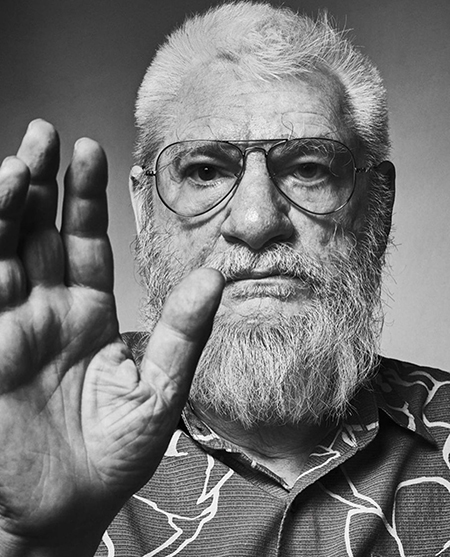
Dan the Lawgiver. It made me laugh. Requiescat in Pacem.

Dan:  here, and here, and here,

So the new baroque Modernism, on its own terms, without defense or rationalization (the language of “baroque specialization”) manifests an ethic not of utopian idealism but of description: of the realities of how we live, of capital and commerce, and of our perceptions of ourselves as actors within the world both define. Glass is everywhere again but now reflection is as important as transparency and the distinction between object and reflection becomes difficult to judge. Solids become light. Talking to younger architects a few years ago about who first began using glass as it’s being used now, I was told that in architecture proper, it was probably the Dutch firm Coop Himmelblau, and before that, Dan Graham. Before that however, and no one mentioned it, it was Jaques Tati, in Playtime.

Architecture is obliged to give simple pleasures before complex ones (even more so than the fine arts are obliged to flatter the wealthy). We may enjoy reading about infernos or even having pictures of them on our walls but it’s still perverse to have a cocktail party in the boiler room. Graham’s use of reflectivity was intended originally to be emotionally disturbing, the sense of disembodiment linked to one of isolation and even terror, and Tati’s response was cooler but no less critical. Life has acclimated us so much to the splintering if not the obliteration of self in the endless reflectivity of mirrors and markets that it’s now an aspect of the popular sense of architectural pleasure. And the architects I talked to remember discovering Graham’s pavilions, and responding to them instantly, in their late teens or early 20s; recognizing what they already understood.

Talking today to an old friend who knew Graham since the early 80s; he was annoyed by all the hagiographies floating around. "Oh, Dan was such a great guy." He was an asshole. 
---

Have to say this worked out.

Wednesday, November 06, 2019

Thinking. Solving problems elsewhere.

‘Innocent’ formalism, the play of the imagination, the timeless present of children, anarchic and pre-humanist.

The formalism of the untrained, in the world of experts. Le Douanier Rousseau

The formalism of elision, of speaking and hiding, originating in childhood experience but continuing in schooled, articulate, adulthood. James, Elliot, Borges

The formalism of autistic savants.

The art of the periods in-between, the aristocratic as opposed to bourgeois culture of time, of absolutism trying to come to terms with contingency in the forms of the baroque, the contradictory ideal theater.  Leibniz, Bernini, Borromini (sorry kids, the argument predates Deleuze)

The intellectual as counsel to the king, or theologian, becoming the intellectual as academic.

The intellectual as jester, the anarchist at court, and the anti-utilitarianism of aristocratic leisure, becoming the anti-academic intellectual as cosmopolitan observer, artist, critic, flaneur.

Some of the tensions are or seem to be specific to Christian Europe and the Socratic contempt for democracy. The evangelical idealism that separated truth from rhetoric –and linked object making and no other art with philosophy– sets Europe apart.

Interesting to see the last two thousand years in the west as largely "post-democratic",  rebelling against the model of Athens and the Roman republic.  Opposition to democracy precedes its re-invention. And liberal philosophers oppose democracy, since they have to be the authors of the state. The word most come before the act. But that's not how it happens.

And repeats: the two cultures of the two cultures. The UK divides pedants and ironists/ philosophers and novelists; French philosophers are both.  The UK legal system is adversarial; the French is inquisitorial: the ironic philosopher is the French intellectual model.
Anglosphere philosophers are pedants; Anglosphere lawyers are ironists.

Athens: a culture with a great official material and literary tradition.

The best way to come to terms with Athens is to refuse to see it as western.

"You can't understand the complexity of Athenian art, dynamic/naturalistic and hieratic, until you see it, and the best of it. Its closest parallels in Asia don't match it. Nothing in Europe matches in since."


Monday, December 17, 2018

One of Brassai’s most famous photographs of 1930s Paris is of Violette Morris, later a Nazi collaborator and torturer for the Gestapo. Sometimes the demimonde understands, like Liebling’s wounded pimp, sometimes not. But Americans like to live their dreams. Edward Mendelson in 1981, reviewing After the Wake: An Essay on the Contemporary Avant-Garde, by Christopher Butler.
The basic claim made by every avant-garde movement – that its artists offer real innovations, that they surpass the limits accepted by their predecessors – is central to Butler’s advocacy. ‘My plan,’ he writes, ‘has been to argue that in the 1950s radically new conventions for the language of art were developed by writers, musicians and painters who wished to break away from modernism.’ This argument faces difficulties at the start, since the avant-garde has been proclaiming its radical newness longer than anyone can remember. The most time-honoured convention of the manifesto-writers is innovation: the formula for newness is handed down unchanged from generation to generation. Butler quotes an artist who wants nothing to do with ‘all the structures, values, feelings, of the whole European tradition. It suits me fine if that’s all down the drain.’ This happens to be Frank Judd speaking in the late 1960s, but all that distinguishes it from Futurist manifestos of fifty years before is its tone of lumpen disgruntlement. Allen Ginsberg, quoted in one of Butler’s epigraphs, says: ‘there is nothing to be learned from history any more. We’re in science fiction now.’ This remark, differing only in vocabulary from claims made early in this century for the new machine age, is proof in itself that Ginsberg’s ignorance of history does not exempt him from repeating it.
A more vivid proof, not mentioned by Butler, may be found in Ginsberg’s recent echoes of the totalitarian apologetics offered by some of the Modernists of the 1920s and 1930s. Ginsberg has placed his spiritual life in the care of a Tibetan guru (one consciously avoided by the Dalai Lama), the autocrat of a spiritual retreat and poetry workshop near Boulder, Colorado. Among the guru’s activities are punching recalcitrant visiting faculty in the face and having them stripped naked by his goon squad. Ginsberg defends the guru’s methods as an “experiment in monarchy”, and insists that he must not be judged by the standards of lesser mortals.[i]
“Frank” Judd is Donald, and the quote is from, “Questions to Stella and Judd”, an interview from 1966.[ii] Read in full it’s as dated as the fragment Mendelson includes. But in 2015 it was reposted on the webpage of the magazine where it first appeared, and called prescient, because the same debates are repeating, in an even smaller subculture.[iii] Mendelson is wrong though to say that  Ginsberg, Judd and Stella didn’t know history, at least as fact. They were still trying to escape it; they each saw ideologies and made their own in response, another schism in the church, another splinter group. But art succeeds if it transcends intent, if it’s more interesting than the chatter that surrounds it, and if the chatter and the art aren’t in conflict, generally speaking it’s the art that makes the chatter interesting, unless the chatter is interesting on its own. The interview is worth reading to understand how much has changed, from the 20s to the 60s and to now.
GLASER: Why do you want to avoid compositional effects? 
JUDD: Well, those effects tend to carry with them all the structures, values, feelings of the whole European tradition. It suits me fine if that’s all down the drain. When Vasarely has optical effects within the squares, they’re never enough, and he has to have at least three or four squares, slanted, tilted inside each other, and all arranged. That is about five times more composition and juggling than he needs. 
GLASER: It s too busy? 
JUDD: It is in terms of somebody like Larry Poons. Vasarely’s composition has the effect of order and quality that traditional European painting had, which I find pretty objectionable.... The objection is not that Vasarely’s busy, but that in his multiplicity there’s a certain structure that has qualities I don’t like. 
GLASER: What qualities?

JUDD: The qualities of European art so far. They’re innumerable and complex, but the main way of saying it is that they’re linked up with a philosophy—rationalism, rationalistic philosophy.

GLASER: Descartes?

JUDD: Yes. 
GLASER: And you mean to say that your work is apart from rationalism?

JUDD: Yes. All that art is based on systems built beforehand, a priori systems; they express a certain type of thinking and logic that is pretty much discredited now as a way of finding out what the world’s like. 
GLASER: Discredited by whom? By empiricists?

JUDD: Scientists, both philosophers and scientists.

GLASER: What is the alternative to a rationalistic system in your method? It’s often said that your work is preconceived, that you plan it out before you do it. Isn’t that a rationalistic method?

JUDD: Not necessarily. That’s much smaller. When you think it out as you work on it, or you think it out beforehand, it’s a much smaller problem than the nature of the work. What you want to express is a much bigger thing than how you may go at it. Larry Poons works out the dots somewhat as he goes along; he figures out a scheme beforehand and also makes changes as he goes along. Obviously I can’t make many changes, though I do what I can when I get stuck.

GLASER: In other words, you might be referring to an antirationalist position before you actually start making the work of art.

JUDD: I’m making it for a quality that I think is interesting and more or less true. And the quality involved in Vasarely’s kind of composition isn’t true to me.

GLASER: Could you be specific about how your own work reflects an antirationalistic point of view?

JUDD: The parts are unrelational.

GLASER: If there’s nothing to relate, then you can’t be rational about it because it’s just there?
JUDD: Yes.

GLASER: Then it’s almost an abdication of logical thinking. 
JUDD: I don’t have anything against using some sort of logic. That’s simple. But when you start relating parts, in the first place, you’re assuming you have a vague whole—the rectangle of the canvas— and definite parts, which is all screwed up, because you should have a definite whole and maybe no parts, or very few. The parts are always more important than the whole. 
GLASER: And you want the whole to be more important than the parts?

JUDD: Yes. The whole’s it. The big problem is to maintain the sense of the whole thing. 
GLASER: Isn’t it that there’s no gestation, that there’s just an idea?

JUDD: I do think about it, I’ll change it if I can. I just want it to exist as a whole thing. And that’s not especially unusual. Painting’s been going toward that for a long time. A lot of people, like Oldenburg for instance, have a “whole” effect to their work. 

Judd is talking about moral imperatives, founded in theological argument. He wants to see things, not arrangements, facts, not chatter. A woman I knew, who’d gone to grad school at Yale, and imbibed all the theory and whose own work was “transgressive’ had always associated Judd with the “Enlightenment values” and art for bank lobbies. And then she met him, and realized that nominally an atheist he was a still a self-punishing Calvinist. She’d seen kink behind the Puritan morality and now she loved the work. 
Michael Fried was right to say that the focus on objects, qua objects, as things which displace air or water and which change in our perceptions as we move around them brings us to the point of theater. 
…I want to make a claim that I cannot hope to prove or substantiate but that I believe nevertheless to be true: viz., that theatre and theatricality are at war today, not simply with modernist painting (or modernist painting and sculpture), but with art as such - and to the extent that the different arts can be described as modernist, with modernist sensibility as such. This claim can be broken down into three propositions or theses: 
1. The success, even the survival, of the arts has come increasingly to depend on their ability to defeat theatre. …
2. Art degenerates as it approaches the condition of theatre. …
3. The concepts of quality and value-and to the extent that these are central to art, the concept of art itself-are meaningful, or wholly meaningful, only within the individual arts. What lies between the arts is theatre. 
Remember Panofsky’s description of the Florentine intermedio… “where the conclusion of Plato’s Republic appeared on the stage”, and the nobleman who wrote “that it was very beautiful but nobody could understand what it was all about.” “Performance art” in the 16th century and the 20thdeveloped for the same reasons: the need to reconcile mandated idealism, eternal, deathless, with growing worldliness, economic and intellectual, and engagement with life as experienced in time.  Performance art was a way for artists raised on idealism to come to terms with relativism, using what they knew to make formalist abstract forms of narrative. Fried was right to say that it was “the negation of art“ as he defined it. Theater is the death of art only for those who associate art and philosophy, with “truth” and not fiction. Minimalism maintained Modernist idealism about itself, as materialism, but not about experience. Fried quotes Greenberg on its beginnings.
Objecthood has also become an issue for modernist sculpture. This is true despite the fact that sculpture, being three-dimensional, resembles both ordinary objects and literalist work in a way that painting does not. Almost ten years ago Clement Greenberg summed up what he saw as the emergence of a new sculptural 'style,' whose master is undoubtedly David Smith, in the following terms: 
To render substance entirely optical, and form, whether pictorial, sculptural, or architectural, as an integral part of ambient space - this brings anti-illusionism full circle. Instead of the illusion of things, we are not offered the illusion of modalities: namely, that matter is incorporeal, weightless, and exists only optically like a mirage. 
Fried tries to pull back from the implications, resisting the change that Smith’s work described. Smith’s sculptures aren’t modernist, they’re Baroque. The Minimalists were faced with the dilemma of  object-makers in a world where interrelations are more important than things; to be loyal to their calling and limit it to what it could do best they became puritans. 
Panofsky called the Baroque a return to the openness of the Renaissance, but transposed. The Counter-Reformation had faded. Late Mannerism had been seen in the forms and facial expressions of sitters for Bronzino. “It is as though the life of these people had gone frozen, or hides itself behind a motionless mask, melancholy and cool, shy and supercilious at the same time.”[iv]That imagery of curdled utopianism is ubiquitous; nihilism is everywhere.  But all these things are mixed, especially now: openness and authoritarian dystopia, humanism and anti-humanism. The Reagan years were floods of human warmth compared to now; the decadence of the 70s is looked back on with nostalgia as an age of innocence. 
In the 80s Stella managed to turn what had devolved into formalist kitsch into something American and grand: the grandeur of the American landscape meeting the formalism of the pedantic American imagination. He rationalized his way over decades and made the result into a baroque amalgam of Walt Disney and Herman Melville, and he made it work. 
Moby Dick, or the White Whale.
A hunt. The last great hunt.
For what ?
For Moby Dick, the huge white sperm whale: who is old, hoary, monstrous, and swims alone; who is unspeakably terrible in his wrath, having so often been attacked; and snow- white.
Of course he is a symbol.
Of what ?
I doubt if even Melville knew exactly. That's the best of it.[v]

I quoted Lawrence earlier not just as someone critical of America but as a great critic of American art. His essay on Moby Dick is brilliant
At first you are put off by the style. It reads like journalism. It seems spurious. You feel Melville is trying to put something over you. It won't do.
And Melville really is a bit sententious: aware of himself, self-conscious, putting something over even himself. But then it's not easy to get into the swing of a piece of deep mysticism when you just set out with a story.
Nobody can be more clownish, more clumsy and sententiously in bad taste, than Herman Melville, even in a great book like Moby Dick. He preaches and holds forth because he's not sure of himself And he holds forth, often, so amateurishly.
The artist was so much greater than the man. The man is rather a tiresome New Englander of the ethical mystical- transcendentalist sort: Emerson, Longfellow, Hawthorne, etc. So unrelieved, the solemn ass even in humour. So hopelessly au grand serieux, you feel like saying: Good God, what does it matter? If life is a tragedy, or a farce, or a disaster, or any- thing else, what do I care! Let life be what it likes. Give me a drink, that's what I want just now.
For my part, life is so many things I don't care what it is. It's not my affair to sum it up. Just now it's a cup of tea. This morning it was wormwood and gall. Hand me the sugar.
One wearies of the grand serieux. There's something false about it. And that's Melville. Oh dear, when the solemn ass brays! brays! brays!
But he was a deep, great artist, even if he was rather a sententious man. He was a real American in that he always felt his audience in front of him. But when he ceases to be American, when he forgets all audience, and gives us his sheer apprehension of the world, then he is wonderful, his book commands a stillness in the soul, an awe.
The one mistake is to say that Melville ceases to be an American when he lets go, but without the repression you can’t have the escape. But I’m not going to go off on an excursus on Stella. He’s succeeded in making complex things, bright and dark, pop and sophisticated; with an optimism suited for the era of Reagan and Thatcher. I’m not going to quibble about politics. The baroque is conservative; it’s big money without guilt; it ignores things. 
The 80’s was the beginnings of art’s move into commercial culture, not the use of its imagery, but the desire to be part of it. 80’s art is full of people who wanted to make movies, who were trying to escape the contempt for film, and for pictorialism, that they were raised with. It’s hard to explain the hold of Greenberg’s moralizing puritanism on the imaginations of people in that world, of Greenberg’s formalism but also the moralizing and intellectual snobbery of conceptualism. I’ll deal in a later section with the artists from what’s now called “The Pictures Generation”, artists torn between jealousy and snobbish contempt for film, a few of whom later after they were successful as artists tried and bombed in Hollywood. Stella found a way out. In 1983 he was asked to deliver the Charles Eliot Norton Lectures at Harvard. His subject was Caravaggio and the future of painting. Working Space[vi]is a testament to the results of years of rationalization and slow transformation. Stella the fundamentalist worked through all the logical arguments he’d grown up with and while still claiming the same faith, he ended up a liberal. If Stella were a brilliant writer it would be a brilliant book. But Stella is one of the most important artists of the post war era; the book is ancillary, doing awkwardly what the work describes brilliantly.  
Deleuze claimed that philosophers create concepts. They don't. To repeat what I wrote above: “By the time anything becomes known as an idea, it’s been around for awhile. Concepts come late to the game. Sensibilities predate their clear articulation.” Nihilism came with Modernism, De Sade is a creature of the Enlightenment, negative idealism that scoffed at but couldn’t escape mirroring utopian claptrap. To rationalists the first answer to rationalism is irrationalism. But then slowly they begin to adapt.  From Architecture in the Age of Divided Representation: The Question of Creativity in the Shadow of Production, by the architectural historian Dalibor Vesely. 
The critical turning point in the formation of modern aesthetics was the contribution of Leibniz, who opposed the Cartesian autonomy of clear and distinct ideas that deprived human senses of any claim to understanding and truth. He firmly believed that our senses do, in their own way, reveal the nature and truth of the world. Unlike ideas, however, the senses are not clear and distinct but only clear and confused, and for that reason inferior. Somewhat poetically he compares them to the murmur of the sea: 
"Although our senses relate to everything, it is not possible for our soul to attend to all individually, and that is why our confused sensations are the result of a variety, altogether infinite, of perceptions. It is almost like the confused murmur heard by those approaching the shores of the sea that arises from the accumulation of the reverberations of the innumerable waves." Leibniz's understanding of the senses is still based on the integrity of the scholastic world in which the sensible or visible is a manifestation of the universal order. This manifestation is also our main encounter with beauty, in which the perfection of the order is revealed. What is new in Leibniz is the shift toward individualizing such experiences, which coincides with his notion of the individual soul as monad. As he sees it, 
the beauty of the universe could be learned in each soul, could one unravel all its folds which develop perceptibly only with time. But as each distinct perception of the soul includes an infinity of confused perceptions which embrace all the universe, the soul itself does not know the things which it perceives, except in so far as it has perceptions of them which are distinct and heightened and it has perceptions in proportion to its distinct form. Each soul knows the infinite, knows everything, but confusedly.
Such confusion arose, Leibniz and his contemporaries thought, because perceptions could not account for their own reason, because their origins and meaning remained hidden. For Leibniz himself and others who believed in providence, this obscurity was not a significant problem, because the unknown, inexplicable, and mysterious was seen as part of the divine plan of things. However, for those who believed in the transparency of the world, in reason, the inexplicable was very troubling. It was difficult to accept that whole areas of reality, such as works of art or the landscape, stirred strong feelings and a sense of beauty that could not be ignored yet could not be explained. This experience was described already in the seventeenth century as the "je ne sais quoi—I know not what."
Dominique Bouhours, who devoted a whole treatise to the issue, declares: "One can say with certainty that 'je ne sais quoi' is one of the greatest wonders and one of the greatest mysteries of nature." Montesquieu, some eighty years later, writes: "There is something in people and in things, an invisible charm, a natural grace, which cannot be defined and which one is forced to name je ne sais quoi.' It seems to me that this is an effect based primarily on surprise." The self-sufficiency of the Leibnizian monad was what brought the inexplicable into the domain of subjectivity, "each mind being as it were a little divinity in its own department."
With Leibniz, we stand on the threshold of a new epoch, in which the harmony and beauty of the world, revealed gradually in a dialectical process, became a field of aesthetic experience dependent on the cultivation of taste and on the role of the genius. The new experience created a distance from things and events, thereby contributing to the formation of modern aestheticism and historicism. Aestheticization itself is closely linked with the relativity of taste and the formalization of experience. [vii]
The translator of Deleuze’ book on Leibniz and the Baroque is a philologist. A history of rationalism is an act of empiricism. Philosophers don’t create concepts any than the first man, or woman, to say "je ne sais quoi” was the first to smile in appreciation. Aesthetics begins when things in the world no longer give a direct relation to universals, when objects as thingsbecome the experience of  things. Experience is individual, a danger to authority. It’s a danger to eternal truths, and thus to the King, as history is a danger to philosophy. Leibniz and Deleuze, as philosophers and conservatives, struggle to reconcile the multiform with the ideal. They’re creatures of their time, no more or less than Caravaggio and Stella. 
Stella defends a spatial formalism, including illusion, in effect defending what is now a cinematic eye, cinematic rather than photographic because the eye is moving. The lectures and book caused a ruckus at the time, but what struck me was less the discovery of Caravaggio than the denial of the worldliness that came with it. This was the 80’s of Schnabel and Salle, the rise of big money in big art, the time when the darkness of Warhol became the common theme. It was a time of crisis, a crisis that only faded because the fights in any real sense were given up. But Stella cruised along unfazed, now like a Hollywood filmmaker who’d never bucked the system to make the work he wanted to make. He was successful young; he’d never had to. He never claimed to be a leftist, a maker of “radical art”. He was only a painter who’d rationalized himself into a corner when he was young and rationalized himself out of it as he grew older. There’s honesty to that.  
Heinrich Wölfflin’s Principles of Art History is one of the founding texts of the field. It’s a brilliant book. When I read it, a bit late, I thought of Stella and it made me laugh. It was all there, even the evasion of the political in favor of the formal. And then more recently I found the paper quoted below and it made me laugh again. Irving Lavin was a friend of Panofsky, the editor of the  book of Panofsky’s essays that I’ve quoted, and his successor at the Institute of Advanced Study. This was presented at a symposium at the University of Jena to coincide with an Stella exhibition.  
Wölfflin defined five categories of human perception between the extreme poles of which all artistic development must inevitably oscillate. He illustrated his principles by the contrast between the historical periods of the Renaissance and Baroque, but the categories have been also been applied to French painting of the nineteenth century and to the development from Classical to Hellenistic in ancient Greece. And, mirabile dictu, Wölfflin’s categories fit Frank Stella’s development like a finely tailored Italian suit of clothes: linear to painterly, planarity to spatiality, closed to open form, multiplicity to unity, clarity to unclarity  …Consider even the subcategories Wölfflin includes under Closed versus Open Form: Geometric versus Organic structure, Symmetry versus Asymmetry; frame controls composition versus “accidental” relationship between composition and frame. The “flat,” rectilinear, parallel lines of the early stripe paintings reappear in the recent “smoke ring” motifs, transformed into looping skeins that remain parallel but now define intricate, looping, transparent planes. The graphic system uncannily recalls that of Mellan, except that Mellan models form by varying the thickness of the line, whereas Stella’s computer-generated filaments are uniform and modulate space by expansions and contractions of the intervening distances. You would think that Stella had read Wölfflin; I never asked him, and I don’t want to know. 
The only problem with this is that it reduces Stella’s work to formalism. Later in the essay Lavin falls back into the hyperbole of the artist as a god-like creator of worlds, boilerplate that works only if you add that it means good artists are great liars, and that great artists tell lies so well they affect you against your will. Lies are formal constructions; their forms are the manifestation of an ethos, a “value system”, and we read and interpret them in relation to each other. Donald Judd’s “unrelational” objects
 exist in relation to their environments and also, obviously, since he says so specifically, to art and ideas that he thought were wrong or “messed up”.  Stella’s best works are bright and poppy, graceful and blunt, dark and violent. It’s worth thinking about, and with, and through.  You can use them to think about the late 20th century, about America, about “art”, about the individual and society, about capitalism, about Caravaggio and Disney World, Clement Greenberg, Herman Melville and Steven Spielberg.  Like all philosophy, his is best read for context
Stella interviewed in 1969 
I wrote my thesis on Celtic, Carolingian and Ottoman manuscript illumination. And it was ostensibly involved with historical problems, about problems in kingship and political issues, and how the ideas of the political leaders of the time were represented by the representations of the God or king figures in the manuscript illumination. But more than a third of it is devoted to a kind of pseudo-aesthetic appreciation of the problems of sort of[sic] interweave and interlace mainly in Celtic work, with a long aside which  should have been a footnote. But since I had to pad the thesis to make
it acceptable I actually included it in the thing on Pollock and the basic problem of decoration and what actually constitutes decoration and how decoration becomes art and when it ceases to be just decoration. And my argument essentially was that both Pollock and Celtic illumination were both art. One happened to be painting and one was manuscript illumination, but they both reached the category of art and left the lower category of simple repetitive design or pedestrian decoration far behind. It doesn't sound very radical in a way. [viii]
1983
The question we must ask ourselves is: Can we find a mode of pictorial expression that will do for abstraction now what Caravaggio's pictorial genius did for sixteenth-century naturalism and its magnificent successors? The expectation is that the answer is yes, but first we have to try to understand what Caravaggio actually did in order to see if his accomplishment can help us. …

But, after all, the aim of art is to create space — space that is not compromised by decoration or illustration, space in which the subjects of painting can live. This is what painting has always been about. Sadly, however, the current prospects for abstraction seem terribly narrowed; its sense of space appears shallow and constricted. This seems ironic when we remember that painting had to work so hard to create its own space, or perhaps more accurately, had to work so hard to free itself from architecture. [ix]

Neither Stella nor Judd began with the Enlightenment; neither began with humanism. Stella changed. Judd stayed loyal to his original preoccupations. He collaborated with dancers; he let choreographers supply an organic element; Stella does it all himself.  You see how the ambiguities build. But both are in the space between philosophical absolutes and relativism,  relativism which can also mean no more than the description of subjective experience, as in theater, literature, film.  For Judd and Stella, that’s still not enough.  


[i]  Edward Mendelson. “Post-Modern Vanguard”, London Review of Books,  September 3 1981
https://www.lrb.co.uk/v03/n16/edward-mendelson/post-modern-vanguard
[ii]Bruce Glaser, “Questions to Stella and Judd”, interview edited by Lucy R. Lippard, Art News, September 1966, in Minimal Art: A Critical Anthology, ed. Gregory Battcock, University of California Press, 1995
[iii]http://www.artnews.com/2015/07/10/what-you-see-is-what-you-see-donald-judd-and-frank-stella-on-the-end-of-painting-in-1966/
[iv]  Panofsky, “What  is Baroque”
[v] Lawrence, “Herman Melville’s Moby Dick”  
[vi]  Frank Stella, Working Space, Harvard University Press, 1986
[vii]Dalibor Vesely, Architecture in the Age of Divided Representation: The Question of Creativity in the Shadow of Production, MIT, 2006
[viii]Sidney Tillim, “Oral history interview with Frank Stella”, 1969. Archives of American Art, Smithsonian Institution.
[ix]Stella, Working Space
Tuesday, June 12, 2018

Vesely, continuing
Chapter 5, p. 249
In the current understanding, aesthetics covers the appreciation of beauty in everything from nature to art. Often it is simply identified with art, whose function par excellence is seen as the production of aesthetic objects. During the past hundred years, aesthetics has also taken on role oppositional to science and technology. This, as we shall see, is a misconception, and in fact a contradiction. Science, technology, and aesthetics belong together. The development of scientific objectivity depends, as we have already seen, on the subject responsible for the project of science. In other words, the more objective reality becomes, the more subjective must be the position of the individual who encounters in modern science by definition, as it were, only his or her own projection of reality. One might conclude that objectivity in science is in fact the product of human subjectivity.

The transformation of the traditional relationship of humans to the world did not affect only science, but became the basis for the gradual split of the whole of European culture into artificial domains of objectivity and subjectivity. With the first we are already familiar. The second contains everything that resists mathematization—qualities, perception, imagination, feeling, and fantasy. It was in this ambiguous domain of qualities that cannot be precisely determined, but at the same time cannot be completely suppressed or ignored, that aesthetics came into existence. It grew slowly out of repeated attempts to establish some kind of logic or order in the qual-itative world, aided as well by what could later be labeled a general aestheticization of culture.

The critical turning point in the formation of modern aesthetics was the contribution of Leibniz, who opposed the Cartesian autonomy of clear and distinct ideas that deprived human senses of any claim to understanding and truth. He firmly believed that our senses do, in their own way, reveal the nature and truth of the world. Unlike ideas, however, the senses are not clear and distinct but only clear and confused, and for that reason inferior. Somewhat poetically he compares them to the murmur of the sea:

"Although our senses relate to everything, it is not possible for our soul to attend to all individually, and that is why our confused sensations are the result of a variety, altogether infinite, of perceptions. It is almost like the confused murmur heard by those approaching the shores of the sea that arises from the accumulation of the reverberations of the innumerable waves." Leibniz's understanding of the senses is still based on the integrity of the scholastic world in which the sensible or visible is a manifestation of the universal order. This manifestation is also our main encounter with beauty, in which the perfection of the order is revealed. What is new in Leibniz is the shift toward individualizing such experiences, which coincides with his notion of the individual soul as monad. As he sees it,
the beauty of the universe could be learned in each soul, could one unravel all its folds which develop perceptibly only with time. But as each distinct perception of the soul includes an infinity of confused perceptions which embrace all the universe, the soul itself does not know the things which it perceives, except in so far as it has perceptions of them which are distinct and heightened and it has perceptions in proportion to its distinct form. Each soul knows the infinite, knows everything, but confusedly.
Such confusion arose, Leibniz and his contemporaries thought, because perceptions could not account for their own reason, because their origins and meaning remained hidden. For Leibniz himself and others who believed in providence, this obscurity was not a significant problem, because the unknown, inexplicable, and mysterious was seen as part of the divine plan of things. However, for those who believed in the transparency of the world, in reason, the inexplicable was very troubling. It was difficult to accept that whole areas of reality, such as works of art or the landscape, stirred strong feelings and a sense of beauty that could not be ignored yet could not be explained. This experience was described already in the seventeenth century as the "je ne sais quoi—I know not what."

Dominique Bouhours, who devoted a whole treatise to the issue, declares: "One can say with certainty that 'je ne sais quoi' is one of the greatest wonders and one of the greatest mysteries of nature." Montesquieu, some eighty years later, writes: "There is something in people and in things, an invisible charm, a natural grace, which cannot be defined and which one is forced to name le ne sais quoi.' It seems to me that this is an effect based primarily on surprise." The self-sufficiency of the Leibnizian monad was what brought the inexplicable into the domain of subjectivity, "each mind being as it were a little divinity in its own department."

With Leibniz, we stand on the threshold of a new epoch, in which the harmony and beauty of the world, revealed gradually in a dialectical process, became a field of aesthetic experience dependent on the cultivation of taste and on the role of the genius. The new experience created a distance from things and events, thereby contributing to the formation of modern aestheticism and historicism. Aestheticization itself is closely linked with the relativity of taste and the formalization of experience. 

--Aesthetics was an invention of the eighteenth century and the age of reason, a theory of art in the shadow of production, as something to be taken or left, optional, superfluous, “parasitic”.

--The Baroque was considered decadent precisely for the discord between easy artifice and rough integrity, but the period was focused less on the balance of ideal and worldly order as in the Renaissance, or on the more extreme dichotomy of otherworldliness and corruption -the panicked pretense of Counter-Reformation Mannerism- than on a worldly sophistication as such: the narrativizing of ideal order. The Baroque is the culture of monarchy and aristocracy at the beginning of the age of theater, the age of the bourgeoisie.
Leibniz: the unified and ideal in the multiform.
I read Vesely years before I returned to writing, but I didn't cite him. I need to.

Tuesday, May 15, 2018

A new tag for Deleuze. I should've done it long ago.
For all I've written, about the Baroque, narrative, Modernism, Mannerism and the fading of the ideal, I've never read The Fold.
The decadence of mannerism presents as the self-narrativizing of a concrete idealism, attempting to inoculate itself against increasingly dominant narrative (relativist) culture. Mannerism is the model of aristocratic art in an age of incipient democracy. The baroque is the same model of conservatism in the age of a fully ascendant democracy: the age of theater.
I referred to it in passing, but it belongs here and I've never bothered to do it.  Now that I'm reading it, it's everything I assumed and more. All I have to do is put in a few references.  He imagines he's creating concepts but he's following a path.

Philosophers are so predictable.  That they insist on seeing themselves as apart from other writers of fiction is more absurd as time goes on. As always, for philosophers and theologians, history is bunk.

Historians win. Vesely Chapter 4, p. 176
The most significant change in the representation of reality took place in the period traditionally associated with the formation and development of modern science and with the beginning of its dominant role in modern culture. Though a connection between the two is plausible, it could be misleading if by "science" we understand the context-free, mathematically structured knowledge that was developed later within new disciplines generally called "natural science." The science of the transitional period between the end of the sixteenth century and the beginning of the eighteenth is instead closely linked with philosophy, metaphysics, theology, and, in a less obvious sense, with the culture as a whole.1

The transitional period overlaps significantly with the period generally termed "Baroque," and the science of this era unquestionably shares many of the characteristics of Baroque culture. We don't usually think of prominent figures such as Sir Isaac Newton or Christiaan Huygens as Baroque scientists, yet we would probably agree that Gottfried Wilhelm Leibniz. the great philosopher and mathematician who was involved in a serious metaphysical and theological argument with Newton, is a Baroque thinker par excellence. Architecture was similarly involved in these issues. The works of Christopher Wren, Claude Perrault, and Guarino Guarini represent not only different tendencies in Baroque architecture but also different trends in Baroque science. The affinity between science and Baroque culture hints at deeper dimensions of representation, not yet fully acknowledged.

Because we usually see Baroque science as an independent domain of knowledge, we tend to overlook the fact that science was then an integral part of the general intelligibility of culture and that it becomes autonomous or independent only under particular and more precisely defined conditions. Indeed, such conditions had never existed before, and their emergence was one of the main characteristics of the transitional period. They were created in unique historical circumstances, by attempts to over-come a deep cultural crisis. I shall say more about that process later. In the meantime, it is important to describe the tendencies that shaped the transitional period as a whole. If we look at the politics, philosophy, literature, visual arts, and everyday life of that time, we find a common search for order and certainty in an environment dominated by fragmentation, relativism of values, skepticism, and pessimism. The radicality of the response, which was based on a dogmatic faith in the mathematical nature of the world order, created for the first time in human history a mode of representation that could claim both that it was fully independent and. at the same time, that it could be universally applied. Because any representation, despite its claims to universality, is inevitably partial, there is always a residuum of reality left out, which has to define its own mode of representation. The result is a duplication that may best be described as "divided representation." A classic example of divided representation is the double standard of truth that has plagued the history of modern science and theology. In architecture, divided representation finds its first clear manifestation in Claude Perrault's distinction between positive and arbitrary beauty, a division that foreshadowed later tensions and conflicts between experience, based on the continuity of tradition, and artificially constructed systems. More recently, divided representation reveals itself as a painful conflict between primary cultural values and technology, which is governed by economic imperatives.
continuing 

Sunday, November 27, 2016

Castro was a dictator who took care of the poor. Calling him a "communist" or defending him as a one is stupid.

A lot of Yugoslavs miss Tito.

Thursday, January 21, 2016

Submitted 1/1/16
---
For the Museum of Capitalism: A Dissent
When I heard about the competition I sent in a proposal immediately with an email, a youtube link and a request for the check. Frankly I was surprised to get a response. The writer wrote to call my bluff: anti-proposals were welcome, but I needed to register first.

The video link was a few minutes from D.A. Pennebaker's short film documenting Jean Tinguely's Homage to New York, a self-destructing machine installed in the garden at MoMA in 1960 and switched on in a show of discreet catastrophe for an audience of money-men, their wives, and cognoscenti. The low-res video images are horrifying, maybe more so than the film, hinting at the destruction of the 20th century, air-raids and ovens, Hamburg, Hiroshima and Auschwitz. The event itself was a comic and nihilistic theater of anti-Fordism for an audience of Fords and Rockefellers.

If I were a designer or an architect or an artist interested in conceptual games I suppose I could draw up a proposal for a self-destructing building. But this isn't a proposal for a building, or an argument against a building made via the proposal of an impossible one. Anti-architecture, like anti-art, and anything predicated on opposition, is by definition an angry child, its anger predicated on the existence of a parent. Parents have responsibilities that children don't, and children on their own are no longer children; they have no choice but to be adults before their time.

Artists want the luxury to remain children; we’re always looking for indulgent parents to adopt us so that we can be angry with them. It's a new phenomenon over the last two hundred years. Entertainers are what artists used to be and architects still are: tradesmen and professionals who work to pay the bills. But architects are required to be optimists while entertainers have broader options.

Entertainment is the art of bourgeois capitalism. Art in the age of mechanical reproduction began with Gutenberg and the printing press, and includes both Shakespeare and the modern novel. Fine art, the art and craft of high-value commodities is a holdover from the ancien régime, and its partisans now play a role no less absurd than defenders of the eternal verities and the gold standard.
All fixed, fast-frozen relations, with their train of ancient and venerable prejudices and opinions, are swept away, all new-formed ones become antiquated before they can ossify. All that is solid melts into air, all that is holy is profaned, and man is at last compelled to face with sober senses his real conditions of life, and his relations with his kind. 
The need of a constantly expanding market for its products chases the bourgeoisie over the entire surface of the globe. It must nestle everywhere, settle everywhere, establish connexions everywhere. 
The bourgeoisie has through its exploitation of the world market given a cosmopolitan character to production and consumption in every country. To the great chagrin of Reactionists, it has drawn from under the feet of industry the national ground on which it stood. All old-established national industries have been destroyed or are daily being destroyed. They are dislodged by new industries, whose introduction becomes a life and death question for all civilised nations, by industries that no longer work up indigenous raw material, but raw material drawn from the remotest zones; industries whose products are consumed, not only at home, but in every quarter of the globe. In place of the old wants, satisfied by the production of the country, we find new wants, requiring for their satisfaction the products of distant lands and climes. In place of the old local and national seclusion and self-sufficiency, we have intercourse in every direction, universal inter-dependence of nations. And as in material, so also in intellectual production. The intellectual creations of individual nations become common property. National one-sidedness and narrow-mindedness become more and more impossible, and from the numerous national and local literatures, there arises a world literature.
Capitalism, in an irony Marx would have enjoyed, returns us to the ancient past, the Bronze Age: the age of stories. The Golden Age is the age of kings, or at the very least aristocrats; capitalism at its grandest is gilded. Architects now are stage designers. The museum of capitalism is the shopping mall, our greatest art made from the conversations of observers of the scene, sitting and talking under the palm trees at Starbucks.

The designer of your webpage understood this, maybe unthinkingly. A 3D font is an illusion of physical and architectural space, but your designer chose a font that's doubly fictional, a contradictory illusion, the only appropriate form for a museum built to house them. It was a brilliant choice. My only quibble with the design was that reading the words “call for ideas”, my first thought was, “Where’s the number?”

After registering, I began to work on a film, a montage of youtube videos recorded in groups as screen captures (the web is the greatest library since Alexandria). I approached Werner Herzog about a voiceover, but I’ve been told now that you’re only reviewing static documents.

In the absence of that I offer the words above. Once you open, the film will be available for exhibition, as will my appropriation of your designer’s image, which I’m having enlarged to 11’x17’, in an edition of 3.

Monday, December 28, 2015

A screaming comes across the sky

Museum of Capitalism, redux.

I sent my proposal without registering, including a request for payment. They asked me to resubmit, following the rules.
You might be surprised how positively our planning committee and jury might respond to proposals that are entirely speculative, conceptual, "jokes", or critical of our Museum or the competition itself.
It helps that my email signature includes this

(\__/)
(='.'=)
(")_(")

"I like the idea, and your cute bunny image."
Americans always see a rabbit not a cat.
A friend found it it. I've always assumed it was designed by a Japanese teenager.

I'm going to resubmit my proposal in the form of a dissent.
There's one more damned than all. He never gambols,
Nor crawls, nor roars, but, from the rest withdrawn,
Gladly of this whole earth would make a shambles
And swallow up existence with a yawn
-Baudelaire

The form of wood is altered if a table is made out of it. Nevertheless the table continues to be wood, an ordinary sensuous thing. But as soon as it emerges as a commodity, it changes into a thing which transcends sensuousness.
-Marx

Nature does not know extinction; all it knows is transformation. Everything science has taught me, and continues to teach me, strengthens my belief in the continuity of our spiritual existence after death.
-Werner von Braun
I didn't send the proposal unawares. The lead juror is Chip Lord, but I wasn't sure anyone still had a sense of humor. And the idea of a museum kind of disgusts me. All museums are museums of capitalism: filing cabinets full of objects and people. Capital dissolves meanings. All that is solid melts into air, and all that is not becomes material. "Philosophers' concepts are called objects. Writers of financial contracts are called financial engineers."

An amusing thing about the pitch for the competition is that the designer used a 3D font based on optical illusions: the image of solidity is not only illusion of three dimensions but a self-defeating one. My anti-proposal made the same argument.

Capitalism:


Wednesday, December 23, 2015

The Museum of Capitalism is an institution dedicated to educating this generation and future generations about the history, philosophy, and legacy of capitalism. Representing the collaborative efforts of a multidisciplinary team of curators, artists, designers, and historians, the Museum strives to broaden public understanding of capitalism through multifaceted programs: exhibitions; research and publication; collecting and preserving material evidence, art, and artifacts related to capitalism; commemorations, reenactments, and other events; and a variety of public programming. As part of an initiative to build a more permanent public presence, the planning committee seeks bold proposals that answer the question: What should the Museum of Capitalism look like? 
Proposals may address questions beyond the visual appearance of the Museum’s design. How will it be built, where will it be located, and how will it interface with its surroundings? How might visitors be drawn to experience capitalism, to think it and to feel it, through interaction with museum spaces? The committee seeks answers to these questions in the form of strong architectural ideas and images.
The Museum of Capitalism’s curatorial vision includes consideration of the close historical ties between museums and capitalism. How might museum spaces reference the role of museums in projects of colonialism, modernization, and industrialization, the social and ecological impacts of the museum’s traditional function in preservation of cultural materials, or the role of museums as ritual spaces for the performance and production of citizenship, identity, and other subjectivities? Entrants are encouraged, though not required, to reflect upon these questions. Who inhabits museum spaces, and why? Who or what is on display, and how does it come to be there? What were the origins and implications of its ordering and classification, its constructed narratives and experiences, its participation and interactivity? And how do the answers to these questions change in a museum that memorializes the era of capitalism? There are no restrictions on scale or scope of proposals—site, square footage, height, materials, budget, etc.—as long as submissions follow competition rules and meet the criteria for entry.

This public competition is the first stage of a design process intended to help guide the thinking behind an eventual building project without imposing any constraints. Designs may be proposed for specific sites or surroundings, may be of reworkings or recontextualizations of existing buildings or sites, and may consist of entire buildings or specific rooms, galleries, or parts of the museum. Though we encourage proposals that are highly conceptual or speculative, the written part of the proposal and its accompanying visual materials should be clear and powerful.
submitted: "My proposal follows the model laid out in the video, but of course on a larger scale."


Museums are for the foreign and the dead. The attempt at the theorization of the living by the living is the biggest delusion of modernity. It turns everything into design, and design is death. Art, even as the description of death, even as synonymous with dying, is not yet synonymous with death.
---
update: "please resubmit"

Friday, August 28, 2015

one more
"If you say why not bomb them tomorrow, I say why not today? If you say today at 5 o'clock, I say why not one o'clock?"

At the end of Modernism, science as romance.
Galison even has a paper: "Objectivity is Romantic"
It's just stunning at this point that this could be taken seriously.

Like the beautiful boy whose perfect grace fades after he sees his own reflection, what began as idealism has become mannerism. At the end of the age of the romance of science, science is defended as romance. There's literally no attempt at contextualizing the myths of science with the record of the failures of scientism.

from Objectivity, Daston and Galison
P39
Yet the tone of exhortation and admonition that permeates the literature of scientific instruction, biography, and autobiography from the seventeenth century to the present is hardly that of a pragmatic how-to manual. The language of these exhortations is often frankly religious, albeit in different registers the humility of the seeker, the wonder of the psalmist who praises creation, the asceticism of the saint. Much of epistemology seems to be parasitic_ upon religious impulses to discipline and sacrifice, just as much of metaphysics seems to be parasitic upon theology. But even if religious overtones are absent or missed as so much window dressing, there remains a core of ethical imperative in the literature on how to do science and become a scientist. The mastery of is inevitably linked to a certain kind of self-mastery, the assiduous cultivation of a certain kind of self. And where the self-is enlisted as both sculptor and sculpture, ethos enters willy-nilly. It is useful for our purposes to distinguish between the ethical and the moral: ethical refers to normative codes of conduct that are bound up with a way of being in the world, an ethos in the sense of the habitual disposition of an individual or group, while moral refers to specific normative rules that may be upheld or transgressed and which one may be held to account.
P 374
This is the reason for the ferociously reflexive character of objectivity, the will pitted against the will, the self against the self. This explains the power of objectivity, an epistemological therapy more radical than any other because the malady it treats is literally, the root of both knowledge and error. The paradoxical aspirations of objectivity explain both its strangeness and its stranglehold on the epistemological imagination. It is epistemology taken to the limit. Objectivity is to epistemology what extreme asceticism is to morality. Other epistemological therapies were rigorous: Plato's rejection of the senses, for example, or Descartes's radical doubt. But objectivity goes beyond rigor. The demands it makes on the knower outstrip even the most strenuous forms of self-cultivation, to the brink of self-destruction. Objectivity is not just one intellectual discipline among many. It is a sacrifice.
P 376
It is a misconception, albeit an entrenched one, that historicism and relativism stride hand in hand, that to reveal that an idea or value has a history is ipso facto to debunk it. But to show that objectivity is neither an inevitable nor an eternal part of science passes no verdict on its validity, desirability, or utility — any more than to document that the prohibition against cruel and unusual punishment first emerged at a particular time and place would per se subvert that judicial principle. Conversely, to point out that certain beliefs and practices have enjoyed widespread acceptance in various cultures and epochs is not necessarily an endorsement: no one thinks better of slavery or geocentrism on learning that many people in many places at many times have subscribed to them. 
C.P. Snow, Strangelove, and The Great Gazoo.


This leads back to Kubrick and Gursky, artists who describe the meanings behind Daston and Galison's"aesthetics". 
     
Daston and Galison at the end of the book refer to images by Marie Farge and Eric J. Heller, scientists with hobbies, as models for an art that combines science, romanticism and mechanism: aesthetic images of systems. The image on the left was the cover illustration of the March 8 2001 issue of Nature. You can see more here. 

It's a standard description of both Kubrick and Gursky that they make aesthetic images of systems. Critics who write about the works don't write about aesthetics; they write about the implications.

This is how art, and language, and history work. Gursky uses the language of Daston and Galison, Heller and Farge. He's from the same place and time, but he sees that language for what it is. He has an objectivity they lack. He sees the emptiness and labels it nihilism.

Tuesday, August 25, 2015

continuing

Daston, Galison and Grant McCracken.
"Trust us. We're experts." Victor Frankenstein 

Daston and Galison. Trained Judgment
This judging, unconscious-intuitive scientific self is a long way from a self built around the imperious will. Nor was it a return to the fragmented self of the eighteenth-century savants. Though expert trained judgment, like truth-to-nature, stood in opposition to mechanical objectivity, trained judgment and truth-to-nature are far from identical. The atlas author of the twentieth century is a more adept version of the reader — a trained expert —not a debased echo of the sage. To the reader-apprentice of the twentieth century, there was no need to rely on the guiding genius's qualitatively different sensibility. The Gibbses may have been more familiar with the erratic markings of an electroencephalogram than the advanced medical student or up-to-date physician, but the aspiring electro-encephalogram reader is promised 98 percent reading accuracy in twelve short weeks. No part of the self-confidence displayed here is grounded in genius. The trained expert (doctor, physicist, astronomer) grounds his or her knowledge in guided experience, not special access to reality. (Imagine Goethe promising his readers the ability to construct the ur-forms of nature after a Gibbs-like high-intensity training course.) Nor are the interpreted images that judgment produces to be likened to the metaphysical images of an earlier age. Explicitly "theoretical," the new depictions not only invited interpretation once they were in place but also built interpretation into the very fabric of the image — but they did so as an epistemic matter. Theirs were exaggerations meant to teach, to communicate, to summarize knowledge, for only through exaggeration (advocates of the interpreted image argued) could the salient be extracted from the otherwise obscuring "naturalized" representation. The extremism of iconography generated by expert judgment exists not to display the ideal world behind the real one but to allow the initiate to learn how to see and to know.

Along with this conjoint history of scientific self and image comes a reshaping of the presupposed audience for the scientific work itself. For different reasons, both the reasoned and the objective images took for granted an epistemic passivity on the part of those who viewed them. The reasoned image is authoritative because it depicts an otherwise hidden truth, and the objective image is authoritative because it "speaks for itself" (or for nature). But the interpreted image demands more from its recipient, explicitly so. The oft-repeated refrain that one needs to learn to read the image actively (with all the complexity that reading implies) also transforms an assumed spectator into an assumed reader. Both the maker and the reader of images have become more active, more dynamic, drawing on unconscious as well as conscious faculties to effect something far more complex than a simple Manichaean struggle of the will between (good) receptivity and (dangerous) intervention.
"The atlas author of the twentieth century is a more adept version of the reader — a trained expert —not a debased echo of the sage. To the reader-apprentice of the twentieth century, there was no need to rely on the guiding genius's qualitatively different sensibility."

endless fucking repeats. Marcus Stanley etc.
"The sociology of modern knowledge production empowers the scholar over the humanist, and the collective / communal enterprise of scholarship over the inspiration of the individual thinker."
You have that precisely backwards. The humanist is embedded in culture by calling, the mathematician only by default, while embedded by choice in a private world of universals. 
I'd forgotten Stanley cites Galison.
...what united the Logical Positivists and the members of Bauhaus was a desire to create an alternative vision of social relations than the one promulgated by Volkisch thought – the intellectual representative of National Socialism.
Daston and Galison can't imagine life outside the bubble of technocratic reason. They can't imagine the history of empire, of people screaming to be heard, ignored by reasonable enlightened white society. Their arguments cannot explain the changing attitudes towards Palestinians in the western imagination.

Immigration and mass communication are the proximate causes of the turn against Zionism, the realization -on the part of westerners and Jews- of what in fact it always was. The experts led no more this time than last, or ever. They've been pushed by events, from outside and below, by the new fact of Palestinians and Muslims, as human beings, in the news and in their lives.

The book is blurbed by Bruno Latour.

repeats
Modernism was the fantasy of writing with the assumption that from then on there would be only reading with and no reading against. To read tale against teller or to read against the grain would be gross error. Rebellion against this has always taken the form of the rebellion of youth against their parents, with the more sympathetic elders caught in the middle, trying to justify the revolt while trying to make it fit with what they know and what they are. So we get the obscurantist poeticizing of Derrida -the philosopher magistrate as wise old fool- and the blandness of Rorty and Nussbaum, struggling to find a way beyond technocracy while being mocked for the attempt by professional technocrats and lionized by amateur enthusiasts. The model of the Continental philosopher was as Pope and Antipope combined, a philosophical self that could contain an other, in a sense obviating the need for actual democracy. And now that Continental and Anglo-American philosophy are joining out of necessity and the need for survival, we see parallels in Bruno Latour's Collective and David Chalmers' Extended Mind.
Galison began with the fantasies of the Bauhaus, the founding fantasies of Israel.

one more

Thursday, August 20, 2015

Carolyn A. Jones, Eyesight Alone: Clement Greenberg's Modernism and the Bureaucratization of the Senses, 2005,  544 pages
Daston and Galison, Objectivity, 2007, 501 pages

Two door-stoppers, one written in scholarly but earnest and too informal prose, the other written in the language of scholarly romanticism; one the result -or maybe the cause- of a schoolmarmish crush on an arrogant and insecure former student, pointing out his errors, the other the product of two students' congratulatory self-love.  Jones refers to Galison and credits reading and talking to him as crucial to her understanding of logical positivism. Her book should stand as a blistering attack on everything he and Daston stand for, love, and indulge. It isn't. Everyone involved is much too polite, committed to the scholarly collaborative reason and to the bureaucracy of the church, the modern academy.
Objectivity is published by Zone.

Jones edited a book with Galison: Picturing Science, Producing Art
The first sentence of the blurb: "The boundaries between science and art will not hold."
The cognitive dissonance is beyond belief.
---
Still writing. Just picked up the book. It's a fucking obscenity.
---
You make an argument and then you realize you have another bigger target.
writing, rewriting, writing, rewriting (also here)
I’m not sure what you say to a historian of science who writes about The Vienna Circle and its relation to the Bauhaus. Peter Galison won a MacArthur fellowship six years after publishing “Aufbau/Bauhaus: Logical Positivism and Architectural Modernism”. By writing a history he’s undermined the arguments of the philosophers, but they did so themselves through their interest in art. And then by relating the art to the philosophy he’s undermining the art. I’ll return to Galison later with his more recent publications with Lorraine Daston -he’s made the same mistake throughout- but for now a brief response to his claims about the Bauhaus will do.

Very few people study the art of the Renaissance because they’re interested in furthering Catholic doctrine. In contemporary terminology, few people are interested in the Sistine Chapel as “illustration”. Works that interest us help us to understand the desires of the people who made them to the point that we understand them better than they understood themselves, and we can do so only because the record they’ve left us is so rich. Art is illusion and subtext, the description and observation (or analysis) of the sensibilities and desires of its makers. A description of a desire is not a desire; a desire for utopia is not utopia. Art has the relation to truth that walking around in a hair shirt is to proof that you’re predestined to salvation. It’s rhetoric. An actor playing a character screaming in pain is not in pain; he’s mimicking and making a reference to pain. The greatest examples of modernist architecture function in the world that exists while describing a desire for something more, as manifest in concrete and glass. If the buildings didn’t function as examples of anti-philosophical worldly sophistication they’d simply fail. If Tatlin’s monument were ever built it would have become a monument to kitsch. As a building it’s absurd. But as a model it’s still a dream each of us can build in our own minds.

The Bauhaus at its best was not a monument to science but to contradiction, to German academicism as ideal and as seen in von Sternberg’s Der blaue Engel. The image that best suits it would be Paul Klee painting his brilliant parti-colored doodles in a spotless lab coat. But we’d remember Klee if the Bauhaus had never existed. The Bauhaus itself is first and foremost in our memories as theater, as a theatrical performance of utopia in the years just before an actually existing hell on earth. Beyond that it’s furniture and dinnerware. The best art made there transcended it. It was better. The philosophers of the Vienna Circle would be unable to make the distinction between their model of the Bauhaus as illustration of a fantasy and its reality as a minor tragic episode in history, evidenced by the tchotchkes left behind.

How do we describe bureaucratic reason as poetry? “Design” as its come to be known is inseparable from aesthetics, which is again, an invention of the 18th century, and a theory that says theories come first. In the beginning was the Word; acts come after, the opposite of historian’s understanding that retrospective intelligence is key; and the opposite of art, that the act of making and the logic of craft is key. “The logic of craft” is the logic of Klee at work, making decisions based on what he thought was, right, proper, fitting, or appropriate, and changing them when he thought they were wrong, or inappropriate, according to a logic connecting his preoccupations with his materials. “Art” is the difference between Bertrand Russell’s History of Western Philosophy, and the identical arguments under the same title, written by the famous logician, Norman Mailer. To a logician they might be the same book, but to a historian and the rest of us they’re very different, because we know that in both cases the author spent a good deal of effort choosing his words, in the same way Paul Klee chose paints. I’m not interested in Bertrand Russell’s intent or Mill’s. If I’m interested at all, I’m interested in the words on the page, which mean more than what they meant to the men who wrote them. Anyone following the ideas of the Vienna Circle knows that they opposed metaphysics. Anyone simply reading the words on the page knows that any idealism is metaphysics. I’ve said I would return later to Galison and I will, but it should be clear already that his definition of art is the Paris Salon, Greenbergian formalism, Madison Avenue, -the contemporary model of "creatives"- and the return to the Gothic unity of art and science that Panofsky, writing in 1939 called “a Middle Ages in reverse”.
more